


The Department of Sociology offers two opportunities for graduate level study:
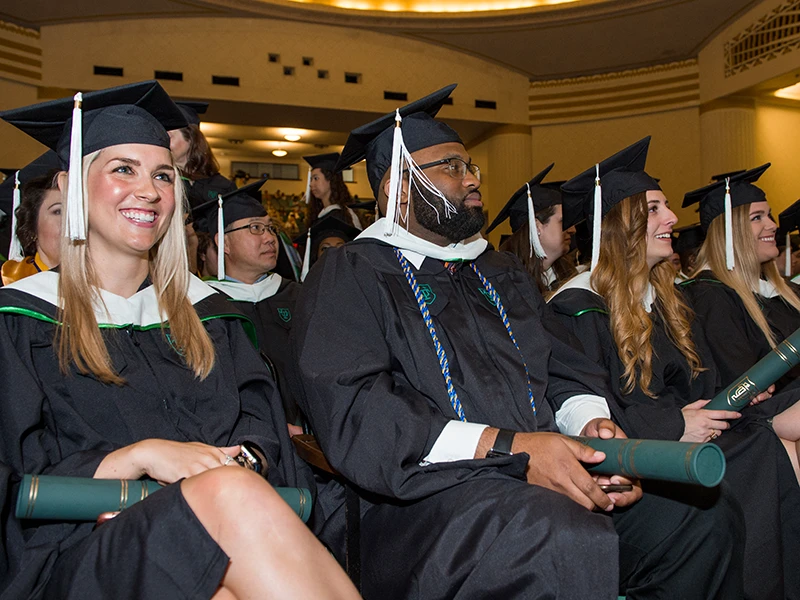
4+1 MA Program in Applied Sociology
This program provides clear pathways from curiosity to impact, developing tomorrow’s most important skills in applied learning.
Undergraduate majors earn a masters degree in one additional year, preparing them for careers in policy or market research, data analysis, non-profit leadership, government agencies, and social justice advocacy.
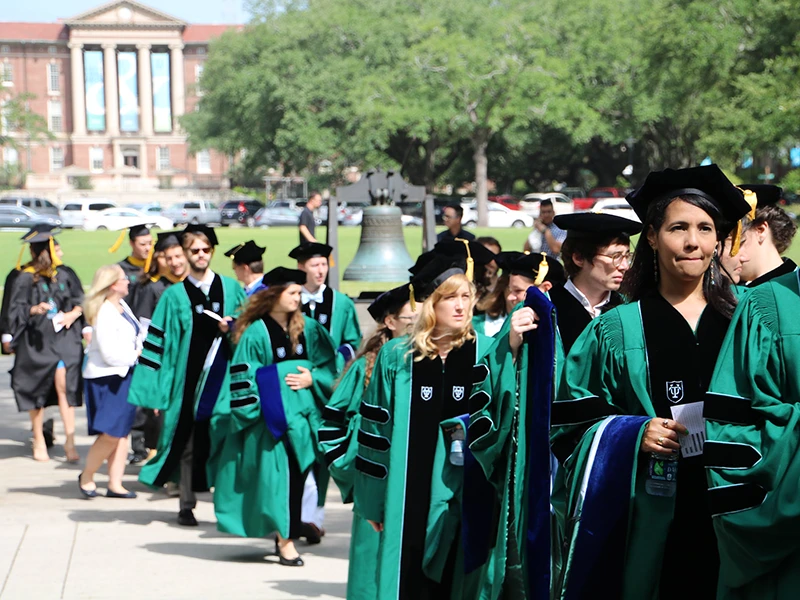
PhD Program in Sociology
We cultivate PhDs who will have a profound impact academically, globally, and professionally.
Our PhD program provides thought leadership training in the fundamental concepts of sociology, evergreen methods of research, and the continually evolving practices of scholarly publication, media engagement, community involvement, and public advocacy.
APPLYING
To apply to a “4+1” program complete the following steps BEFORE APRIL 1:
- Review the School of Liberal Arts Prospective Students page
- Go to the Graduate Admission Application Portal and sign in
- Select “Start New Application”
- Finally select “4+1 Liberal Arts”
Review of applications will commence April 15 and conclude May 15, 2026. Interested students should apply for the 4+1 program by April 15 of the student's junior year.
No GRE scores or official transcripts are required. However, a statement of purpose is required, as are two letters of recommendation from undergraduate faculty (at least one from within Sociology) and a writing sample, such as a thesis or term paper.
No financial aid is available for the ASA 4+1 program, but we offer reduced tuition. Prospective applicants can learn more at the tuition and fee schedule for graduate programs in the School of Liberal Arts.
Apply Now via the Graduate Admissions Application page
For questions regarding program requirements, application process, or admission, please contact the Director of Graduate Studies, Kevin Gotham at kgotham@tulane.edu.
Sociology PhD Program
DEADLINE TO APPLY: MARCH 1
We are thrilled to announce a new PhD program in Sociology at Tulane University to be launched in 2026. The program stands out for its interdisciplinary linkages, a focus on both academic and non-academic careers, and articulation with Tulane’s program on Publicly Engaged Scholarship.
MISSION STATEMENT
Tulane’s Doctoral Program in Sociology seeks to train students in the fundamental concepts of sociology, evergreen methods of research, and the continually evolving practices of scholarly publication, media engagement, community involvement, and public advocacy. We aim to cultivate PhDs who will have an impact both within academia and beyond.
Our curriculum emphasizes transferable skills crucial for academic and non-academic domains: advanced data analysis, qualitative and quantitative research, grant writing, and the ability to communicate complex research findings to multiple audiences. This approach ensures graduates are poised to succeed whether they pursue careers in academia, policy research, non-profit leadership, government agencies, or private sector consulting.
This preparation will be facilitated by a partnership with Tulane’s program for Publicly Engaged Scholarship. Students will have the opportunity to develop practical experience in collaborative community research as well as public engagement and communication.
FACULTY SPECIALTIES
Our faculty work in a range of domestic and international contexts, using quantitative, qualitative, and mixed methods. We take advantage of Tulane’s location in a dynamic urban setting on the Gulf Coast, and draw on Tulane’s traditional strengths in Latin American studies, as well as its deepening engagements in Asia, the Middle East and North Africa, and the African Diaspora. Our faculty is committed to applied and public-facing scholarship. Many actively engage local, national, and international media on current issues, and collaborate with varied communities.
Our substantive sociological interests focus on the following five areas:
- Environment: Socio-environmental relations through agriculture, land use, urbanization, and climate change (Bertana, Gotham, Leguizamón, McKinney, Oliver).
- Gender, Sexuality, and Family: The forces that shape gender and sexual relations and identities, and how they impact reproduction, education, the family, and interpersonal relationships (Adams, Johnson, Schippers, Wade).
- Health and Medicine: Social determinants of health; reproductive health; mental health and illness; systems of care; health professions; medical technologies (Craciun, Johnson, Ostertag).
- Politics, Crime, and Law: Political sociology; social movements and protest; sociology of law; policing, crime and violence (Boyles, Chen, Gotham, Jiang, Leslie, Ostertag, Rafail, Smilde).
- Race, Ethnicity, and Immigration: The social construction of race; impact of racial classification on inequality and conflict; social dynamics of international and internal migration (Boyles, Chen, Jiang, Miles, Ostertag).
MILESTONES, EXAMINATIONS, and OVERSIGHT of STUDENT DEGREE PROCESS
Students must pass five program milestones: (1) Completing Two Qualifying Examinations, (2) Writing an MA Thesis, (3) Choosing a Dissertation Advisor and Committee, (4) writing the Dissertation Prospectus and gaining Admission to Candidacy, (5) holding a successful Dissertation Defense. Successful progress through the PhD program requires earning a B+ in core courses (including 3 of the 5 required electives) and meeting these five milestones on time.
- Qualifying Examinations: are taken during the Spring and Fall semesters of the third year, respectively. The first examination will focus on an established sociological domain; the second on a cross-disciplinary body of scholarship that will serve as a foundation for the dissertation. Qualifying examinations are graded by committees of at least three faculty, chaired by a Sociology department member. The first examination may, and the second must, include a member from outside Sociology.
- Master’s Thesis: During their second year, students will form an MA Thesis committee of three or more faculty, chaired by a tenured Sociology department member, which can include relevant faculty from outside Sociology (at the chair’s discretion). This MA Thesis is a crucial steppingstone in students' research training, furnishing early hands-on experience in conducting independent research, applying methodological skills, and developing writing proficiency before taking on the more extensive dissertation project. Students will complete their MA Thesis in the Summer following their second year.
- Choosing a Dissertation Advisor and assembling a Committee: Students should use coursework and the process of assembling their MA Thesis and Qualifying Examination committees as a basis for choosing their Dissertation Advisor and Committee Members. By the beginning of their third year, students should have a Dissertation Advisor and a rough sense of their Committee makeup in anticipation of planning their Prospectus defense in the Spring semester. Committees will consist of a chair, chosen from tenured Sociology faculty, as well as at least two more members, including someone from outside the department. Students with an area concentration outside the department will draw a member from that department or program.
- 3rd Year Prospectus: In the Spring of year three students will produce and defend their dissertation prospectus. An optimal trajectory through the program will see a student use their methods courses, MA Thesis, and Qualifying Examinations as a cumulative process of skill-building, theoretical learning, and topic specification that culminates in their prospectus. With completion of their required coursework and successful defense of their prospectus, students will advance to the status of PhD candidate.
- 5. Oral Defense: Students will commence dissertation data collection and analysis in the summer following their third year. The PhD in Sociology is designed for completion in five years. Thus, candidates should spend year four conducting research and analysis such that they are ready to begin writing at the start of year five. Successful progress through this stage entails steady communication with a Dissertation Advisor. Upon completing the dissertation, per School of Liberal Arts rules, a student and their committee must schedule on Oral Defense of their dissertation. Once the defense is scheduled and organized, Committee members will sign an Oral Defense Approval Form, provide the completed form to Sociology’s Director of Graduate Studies, and submit the original signed form to the SLA Graduate Programs office immediately following the Defense.
ADMISSIONS
To be considered for admission to the Sociology PhD, applicants must provide by March 1, 2026: (1) a Resume or CV, (2) an academic or professional Writing Sample, (3) three letters of recommendation, (4) a statement of scholarly purpose identifying the sociology faculty with whom the student wishes to work and why, and (5) GRE scores. Please read the application process and submit all application materials via the Tulane School of Liberal Arts Graduate Studies website.
STUDENT FUNDING
Admitted students are provided five years of funding, which includes a blend of TA Appointments and fellowship support.
Apply Now via the Graduate Admissions Application page
For questions regarding program requirements, application process, or admission, please contact the Director of Graduate Studies, Kevin Gotham at kgotham@tulane.edu.