
Tulane Receives Transformational Gift for Jewish Studies
Upcoming Events
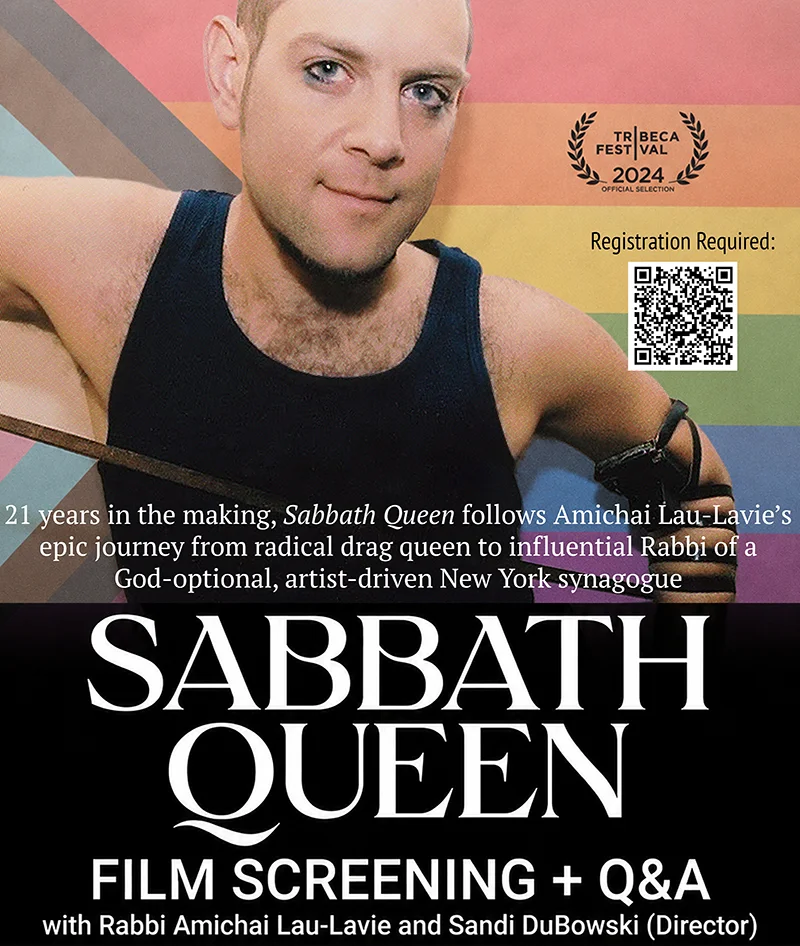

Sabbath Queen Film Screening + Q&A
Twenty-one years in the making, Sabbath Queen follows Amichai Lau-Lavie’s journey from radical drag queen to influential rabbi of a God-optional, artist-driven New York synagogue.
This program features a screening of the film, followed by a Q&A with Lau-Lavie and director Sandi DuBowski, moderated by Prof. Golan Moskowitz.
Register through Eventbrite or present a current Tulane Splash Card for entry.
Sponsors: Tulane Department of Jewish Studies, Tulane Hillel, Tulane Office of Academic Excellence & Opportunity, Tulane Program for Gender & Sexuality Studies, Maurice L. Silverstein Fund, Tulane Department of Communication, Touro Synagogue, and Tulane LGBTQIA+ Faculty/Staff Affinity Group.
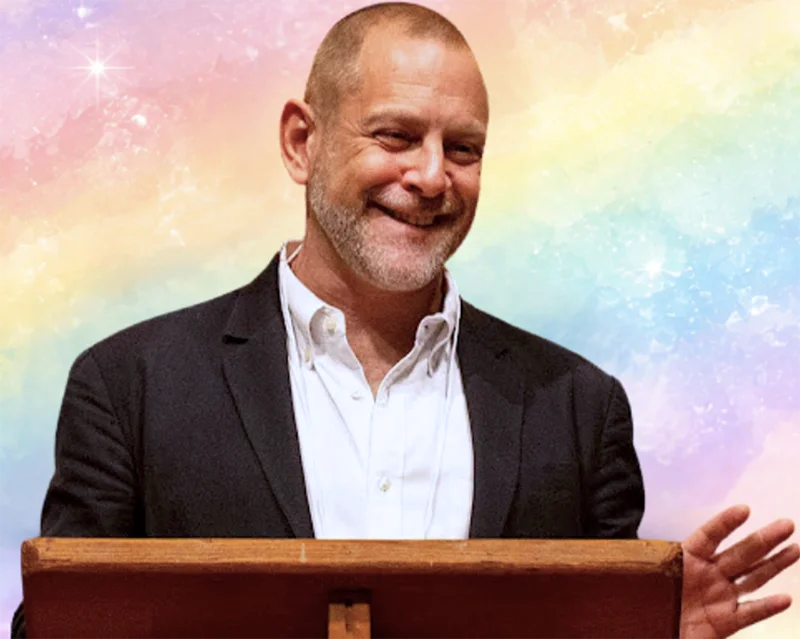
A Bigger Table: Shabbat with Rabbi Amichai 👑✨
Join Tulane Hillel and JP NOLA for a night of singing, good food, and new friends with Rabbi Amichai Lau-Lavie, the energetic prayer leader featured in the award-winning documentary Sabbath Queen.
Start with a Kabbalat Shabbat full of song and prayer, settle in for dinner with your tablemates, then stay for a special presentation by performance artist and Tulane grad student Stuart B Meyers. You don’t need to have seen the film or know the prayers. Everyone’s welcome, ages 18+.
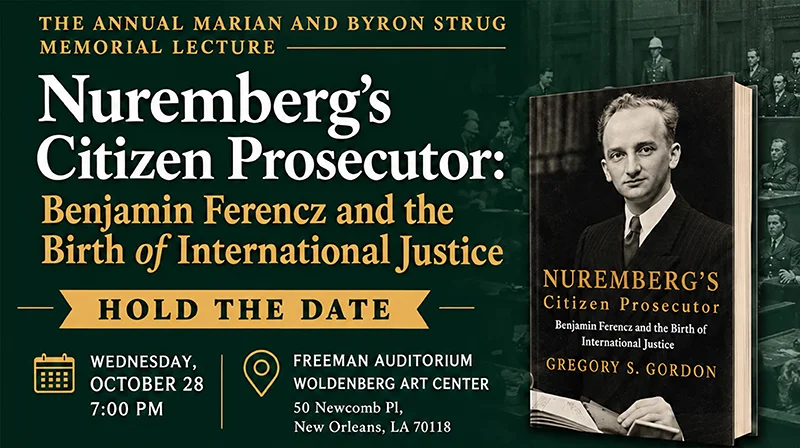
Professor Gregory Gordon’s lecture will analyze the remarkable life of one of the twentieth century’s great warriors for justice, from Nuremberg to the first trial of the International Criminal Court.
Professor Gregory S. Gordon
Professor of Law, Peking University School of Transnational Law
Gregory S. Gordon is a Professor of Law at Peking University School of Transnational Law and one of the world’s leading authorities on international criminal law. A former prosecutor at the International Criminal Tribunal for Rwanda and the U.S. Department of Justice, he has investigated and prosecuted war crimes, genocide, and human rights violations for more than two decades.
Annual Marian and Byron Strug Memorial Lecture
Nuremberg’s Citizen Prosecutor: Benjamin Ferencz and the Birth of International Justice
Register through Eventbrite or present a current Tulane Splash Card for entry.
On September 29, 1947, in Courtroom 600, before the Nuremberg Military Tribunal, twenty-seven-year-old Benjamin Ferencz approached the lectern to deliver the prosecution’s opening statement against Hitler’s brutal henchmen of the Einsatzgruppen—the SS killing units responsible for more than 1.5 million deaths during the Holocaust—in what the Associated Press dubbed “the biggest murder trial in history.” As the field of international criminal justice was being born in the aftermath of World War II, only Ferencz led in all its phases: investigation, prosecution, and restitution—an extraordinary feat given his humble origins as an impoverished immigrant escaping antisemitic persecution in Eastern Europe and growing up in New York’s Hell’s Kitchen. A Harvard Law scholarship student, Ferencz had been General Patton’s lead war crimes field investigator before becoming a chief prosecutor at Nuremberg. Horrified by what he encountered, he dedicated his career to Holocaust survivors, pioneering key restitution efforts and helping negotiate the landmark reparations treaty between West Germany, Israel, and Jewish civil society. Later, he became a peace advocate and driving force behind the creation of the International Criminal Court, remarkably joining the prosecution for the Court’s first trial as the last living Nuremberg prosecutor.
Prof. Gregory Gordon, a former war crimes prosecutor himself and the first scholar with full access to Ferencz’s personal papers, has produced an expansive, page-turning biography that uncovers incredible, and previously unknown, details about Ferencz’s remarkable life. In this first major biography of the Nuremberg prosecutor in English, Gordon reveals fascinating missing links running through Ferencz’s career which throw into a whole new light his landmark achievements.
Past Events
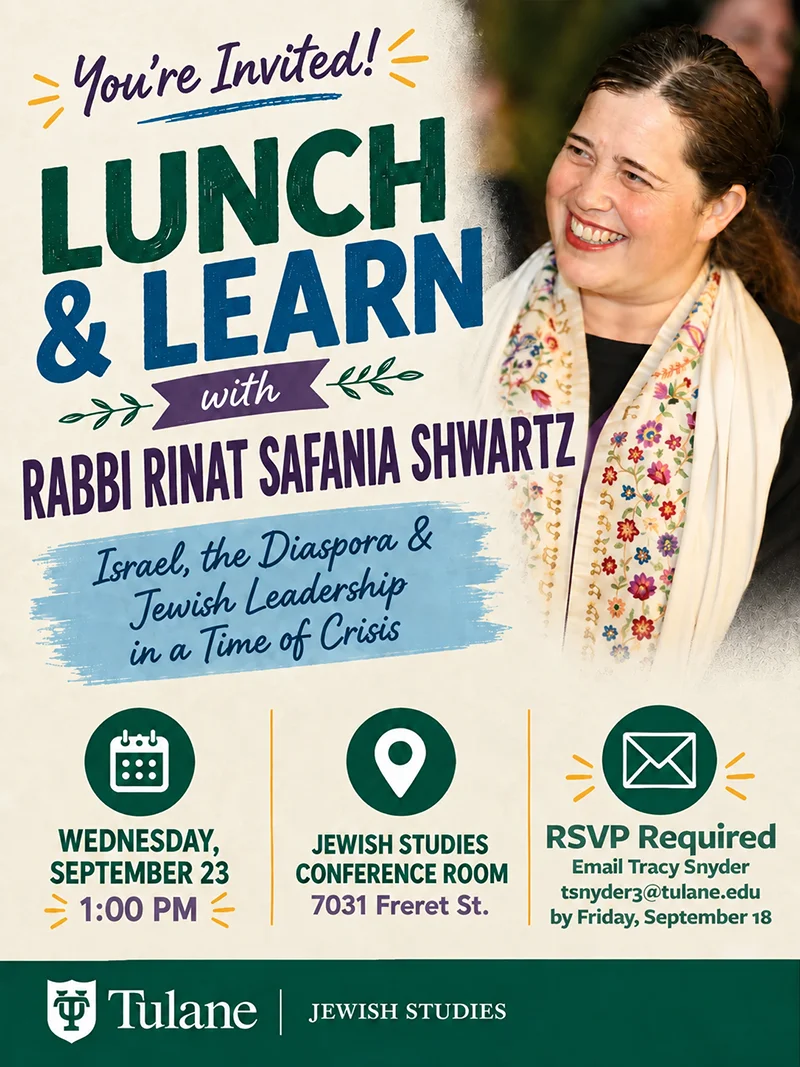
Lunch & Learn with Rabbi Safania Shwartz
A chance for Tulane Students, faculty, and staff to engage in an intimate, meaningful conversation.
How do you lead a community during chaos? How do you hold firmly to your values while working toward Unity?
Join Rabbi Safania Shwartz for a conversational Lunch & Learn about her work supporting hostage families, building community resilience, leading women’s initiatives, and strengthening Israel-Diaspora relations.
Who is Rabbi Safania Shwartz? Rabbi Safania Shwartz is the founding Rabbi of “Ve’Ahavta,” a Reform congregation in Shoham, and the regional Rabbi of the Modi’in area in central Israel, since 2015. Rabbi Safania Shwartz was ordained as a Rabbi at the Hebrew Union College in Jerusalem in 2017.
She holds two Master’s degrees, one in Educational Counseling and another in Pluralistic Jewish Education, and a BA in Psychology.
Rabbi Safania Shwartz grew up in Jerusalem. She was deeply involved in “Noar Telem” — the youth movement of the Israel Movement for Reform Judaism — and later became its Education and Summer Camps Director. Rabbi Safania Shwartz has written and implemented Jewish education programs throughout Israel and abroad.
Hear directly from Rabbi Safania Shwartz about her leadership in Israel, her work with Jewish education, and her efforts to build bridges between Israel and Diaspora Jewish communities.
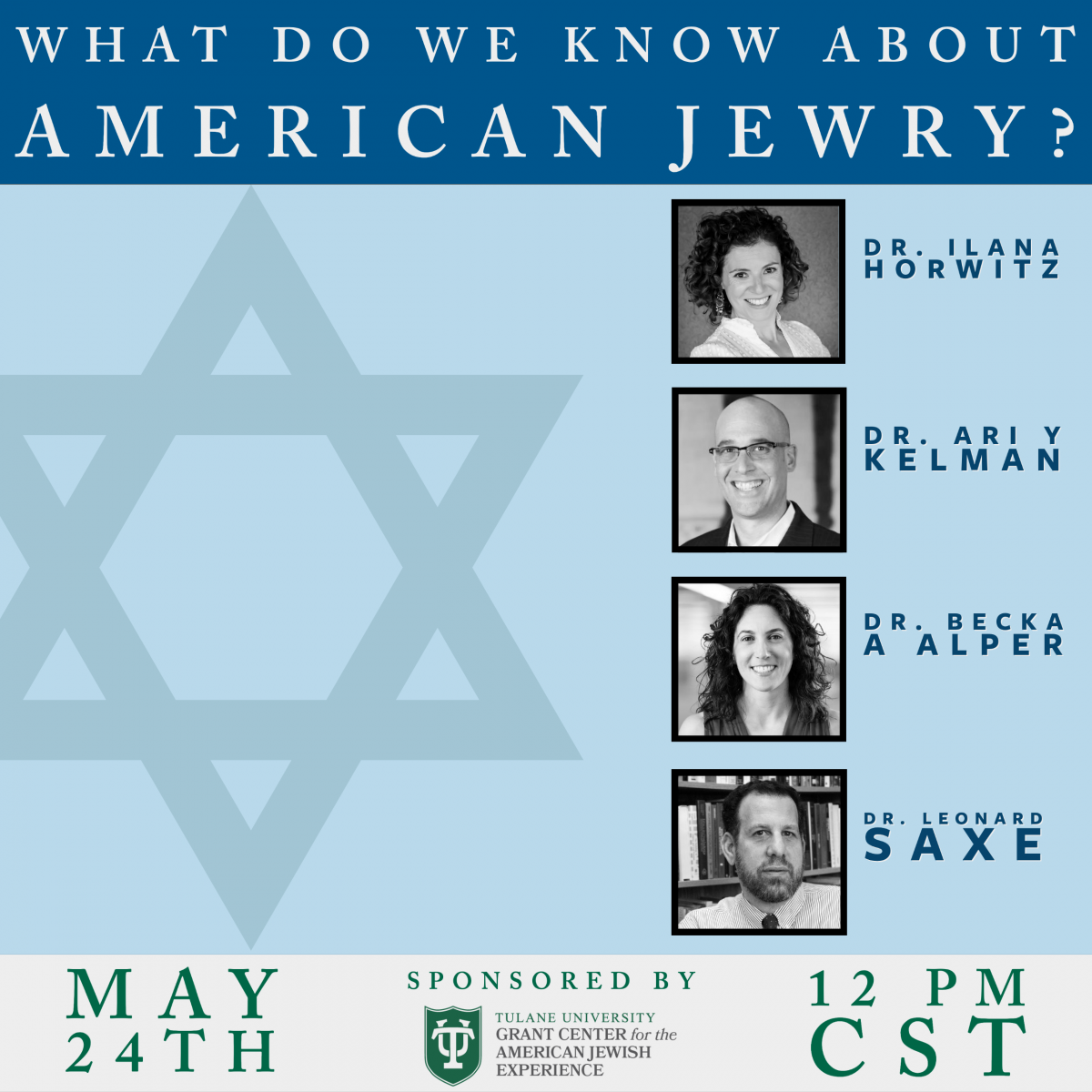
What do we know about American Jewry? A Conversation on the 2020 Pew Survey of Jewish Americans
Featuring Dr. Ilana Horwitz (Tulane University), Dr. Ari Y. Kelman (Stanford University), Dr. Becka A. Alper (Pew Research Center), and Dr. Leonard Saxe (Brandeis University).
Sponsor: Grant Center for the American Jewish Experience.
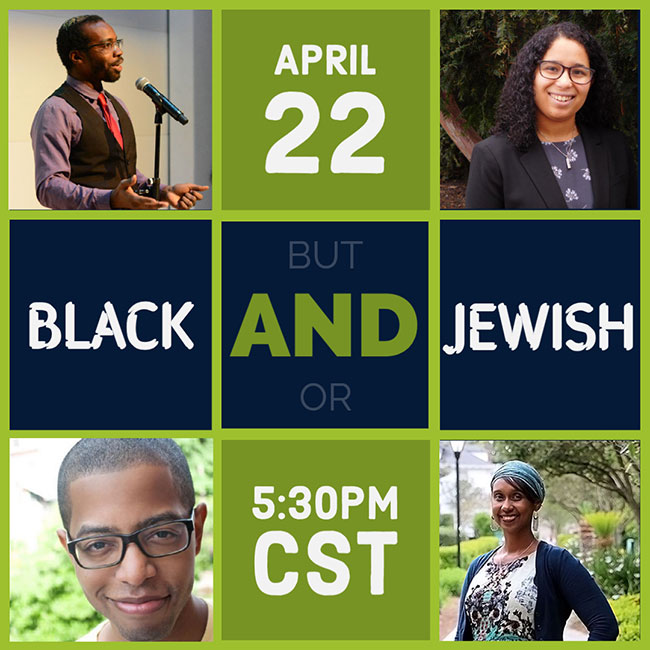
Black [but / AND / or] Jewish: A Conversation on Intersections within and across Communities
Dr. Mia L. Kearney-Bagneris, Associate Professor of African Diaspora Art & Studies of Race in Western Art and Director of the Africana Studies Program, will moderate a discussion on starting and changing the conversation about intersectional Jewish identities, what it means to be Black AND Jewish, and how Black Jews can be supported.
Co-sponsored by the Grant Center for the American Jewish Experience and the Africana Studies Program.
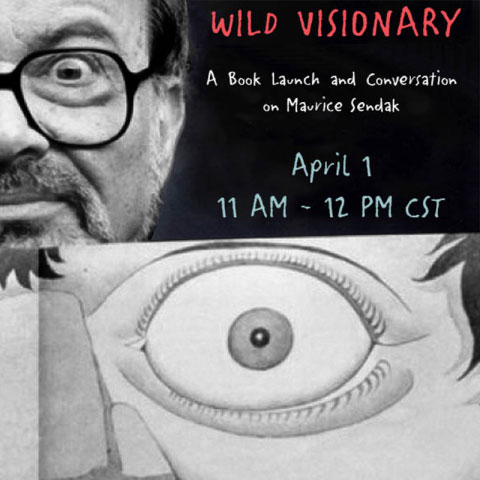
Wild Visionary A Book Launch and Conversation on Maurice Sendak