
National awards, major grants and faculty honors highlight the globally engaged research culture thriving across Tulane’s School of Liberal Arts.
Tulane University’s Department of Anthropology is celebrating a remarkable year of research, recognition and academic achievement, with students and faculty earning national awards, major research grants and prestigious university honors across archaeology, biological anthropology and sociocultural anthropology.
The accomplishments mark an especially exciting moment for Anthropology while also reflecting the broader strength of Tulane’s School of Liberal Arts, where faculty and students continue to produce globally engaged research spanning continents, disciplines and communities. From Maya archaeology and linguistic anthropology to primate behavior and West African studies, the department’s work reflects the field-based, interdisciplinary scholarship that defines Tulane’s role as a leading R1 research university.
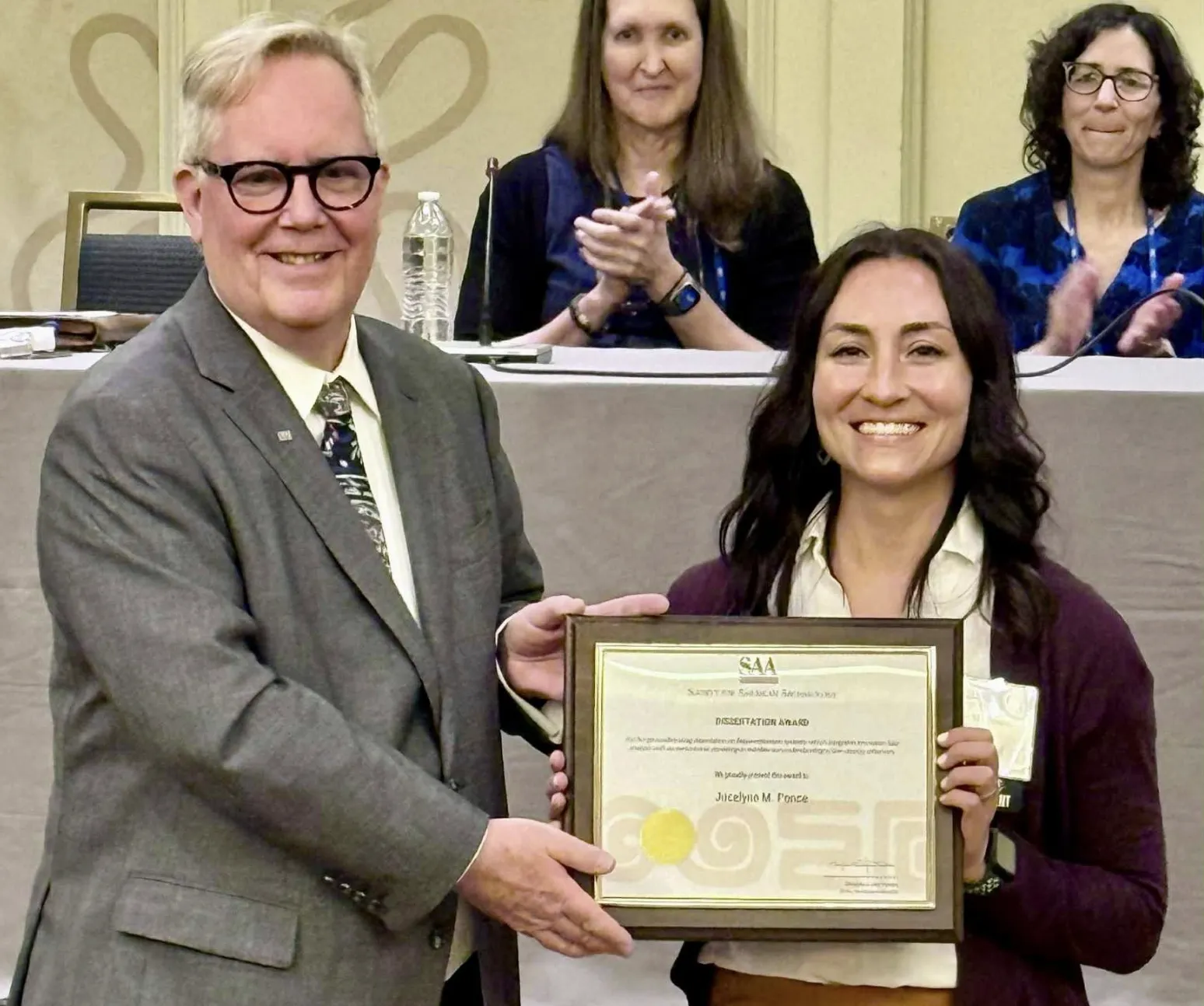
Among the department’s most significant honors is the Society for American Archaeology Dissertation Award earned by recent Tulane PhD graduate Dr. Jocelyne Ponce, one of the field’s highest recognitions for doctoral research.
Ponce’s dissertation explores Classic Maya life at La Corona, Guatemala, combining laser mapping technology called lidar, geoarchaeological and anthropological methods to shift focus from monumental architecture to the people and communities that shaped everyday life in the ancient Maya world.
The department also celebrated anthropology doctoral graduate Rubén Morales Forte, who received a 2026 Tulane 34 award recognizing students whose achievements and service have made a lasting impact on the university community. Morales Forte conducted sociolinguistic fieldwork in the Ch’orti’ region of Guatemala while mentoring undergraduate students through the Maya Scripta Project. He’s slated to begin a tenure-track appointment as assistant professor of anthropology at California State Polytechnic University, Humboldt.
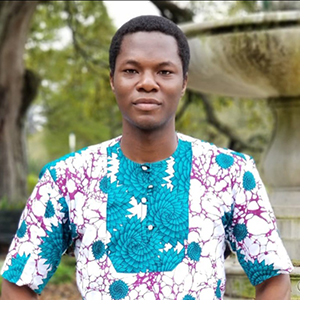
Another anthropology PhD graduate, Adebimpe Adegbite (left), is continuing his academic career at the University of Texas at Austin as assistant professor of instruction in African and African Diaspora Studies, where his work focuses on language, culture and multilingual communities.
At the undergraduate level, anthropology major Catarina Vazquez received Newcomb-Tulane College’s highest academic honor, the William Wallace Peery Medal for Academic Excellence. Vazquez combined scholarship, research and community engagement throughout her time at Tulane, exploring gender-based violence through her honors thesis while contributing to oral history projects and student leadership initiatives. She will continue her studies this fall in a PhD program in anthropology at the University of Florida.
Graduate students across the department also secured an impressive range of competitive funding for dissertation and field research.
PhD students MinJoo Choi, Jordan Kobylt and Miguel Garcia Mollinedo each received Lewis and Clark Fund for Exploration and Field Research grants from the American Philosophical Society. Choi, who also received a Global South Research Grant, studies how communities in the Peruvian Andes reorganized social life following the decline of the Chavín cultural tradition. Kobylt’s work examines ancient urban density at the Maya center of Calakmul in southeastern Mexico, while Mollinedo studies early monumental architecture at the Olmec site of La Duda in the Gulf Coast lowlands of present-day Mexico.
In biological anthropology, Tulane researchers studying wild capuchin monkeys in Costa Rica received multiple major grants supporting long-term research on behavior, communication and aging.
Associate Dean and Professor Katharine Jack received National Institutes of Health funding to study how social and environmental conditions influence biological aging in wild capuchins. Doctoral candidate Nelle Kulick received two grants supporting research on how capuchins respond to drought and food scarcity, while PhD candidate Nick Chapoy earned both Leakey Foundation and National Science Foundation support for research on vocal communication and dominance among white-faced capuchins.
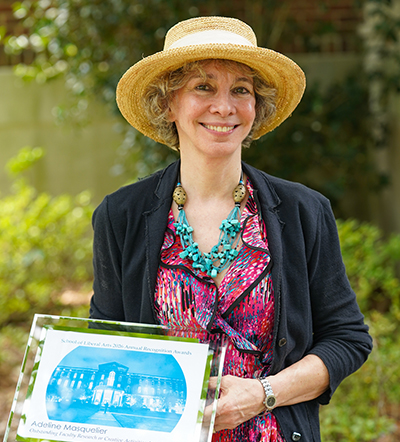
Faculty honors added to the department’s momentum. Professor Adeline Masquelier (right) was named the 2026 recipient of the Outstanding Faculty Research or Creative Activities Award for her internationally recognized scholarship on religion and society in West Africa. Assistant Professor Claudia Chávez Argüelles received the 2026 Outstanding Faculty Service Award in Latin American Studies in recognition of her mentorship, scholarship and community engagement.
Together, the honors reflect more than a banner year for one department. They highlight the collaborative research culture, mentorship and global perspective that continue to shape Tulane’s School of Liberal Arts, where students and faculty are conducting work that reaches far beyond campus and into communities, archives, field sites and research centers around the world.