
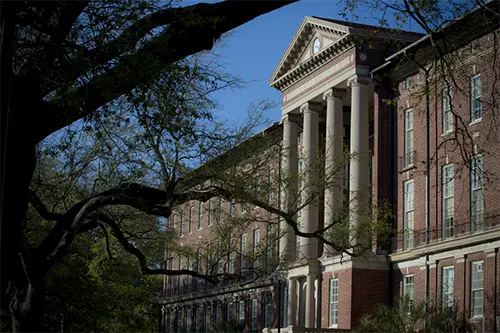
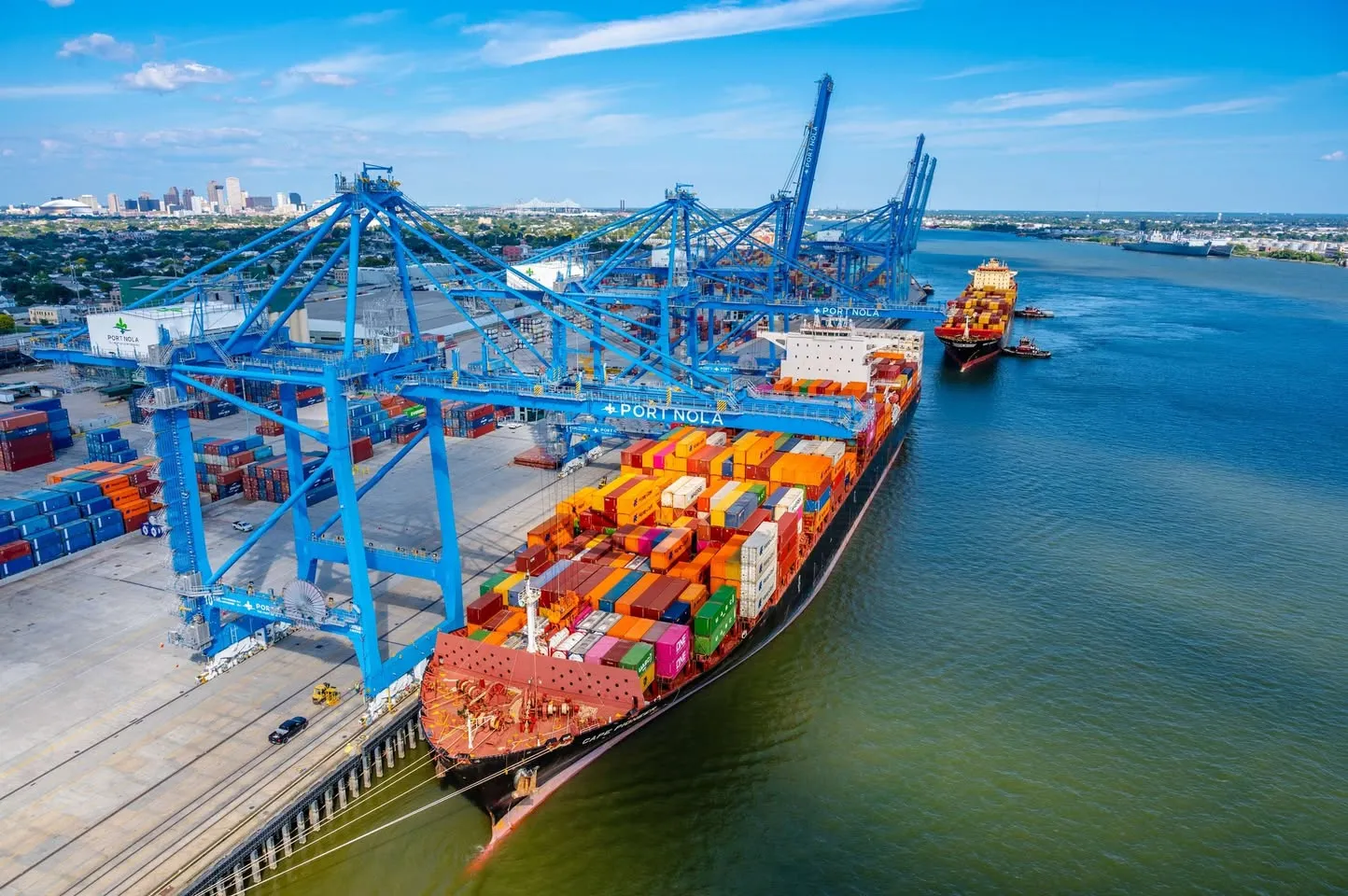
At a moment when many institutions are scaling back investment in the humanities, Tulane is doubling down. Bringing together academics from six different universities and 14 fields, the new Tulane Global Humanities Center launched its first symposium, focused on the biennial theme: Global Port Cities.
Hosted in New Orleans, a city shaped for centuries by migration, industry, and sea level patterns, the symposium brought together scholars, artists, architects, writers, and musicians to explore how port cities — past and present — offer critical insight into movement, power, culture, and change. Across disciplines and historical periods, panelists examined how ports shape everyday life, creative expression, and political ideology.
The symposium also served as a public introduction to the Global Humanities Center’s mission: to strengthen Tulane’s humanities community, expand global and transnational research, and highlight New Orleans and the Gulf South’s connections to the Caribbean, Africa, and Latin America. The center will also boost innovation in the study of humanities and the skills gained from it through funding, fellowships, and collaborative working groups.
“The humanities are varied, of course, and include multiple disciplines and areas, but what they have in common is an emphasis on people, cultures, and forms of expression that are often missed,” shared Tulane School of Liberal Arts Dean Brian T. Edwards. “The human and societal challenges we face seem especially great, and it is a moment when the world is both more complex and more interconnected than ever.”
Panel 1: Port Cities — A Conversation
The opening panel framed port cities as dynamic, urban spaces shaped by constant movement and exchange. Speakers Vyjayanthi Rao (Yale University), Brent Hayes Edwards (Columbia University), and Dean Edwards emphasized that ports are not simply infrastructures of trade, but complex cultural environments where multiple languages, histories, and forms of creativity intersect. Port cities, they argued, are often sites of experimentation — producing new social arrangements, artistic forms, and ways of belonging.
Drawing on examples from New Orleans, Mumbai, and Marseille, the panel explored how changes in port technology and global trade have reshaped urban life. As ports become less visible — physically and economically — many cities have experienced parallel shifts from industrial labor to real estate development, often displacing working-class communities while obscuring the port’s ongoing global role. Throughout the discussion, port cities emerged as relational spaces, defined less by borders than by their connections to other ports and diasporic networks.
Keynote: Circulation and Comparison in Global Socio-Cultural Flows
Arjun Appadurai, Emeritus Professor of Media, Culture and Communication at New York University, was the Symposium’s keynote speaker, discussing how global cultural flows make comparisons between objects blurry, prompting questions such as why some cultural forms move across national boundaries easily and others less so. One of his main examples was the migration of Black American Jazz from New Orleans to Bombay in the 1930’s and the musicians' success in establishing a jazz nightlife at places like the Taj Mahal Hotel.
Anthropology Associate Professor Andrew McDowell (Tulane) led a Q&A after Appadurai’s presentation, opening up the conversation to both panelists and attendees.
Panel 2: Free Zone, Conservation, Colonial Heritage
The conversation also turned to UNESCO World Heritage designations, with Janakiraman questioning whose histories are preserved and whose are marginalized. Both panelists emphasized that heritage conservation is deeply political: while it can bring visibility and economic investment, it can also reinforce colonial legacies and produce new forms of exclusion. Together, the presentations challenged the audience to reconsider conservation and deregulation as parallel logics reshaping cities in the name of economic value, but for whom?
Panel 3: Port Cities Fictions & Diaspora
Fiction and storytelling took center stage to explore port cities as spaces of personal and political transformation with Myriam J. A. Chancy (Scripps College), author of The Village Weavers, and Yuri Herrera-Gutiérrez (Tulane University), author of Season of the Swamp. Drawing from their recent novels, each reflected on how ports shape experiences of migration, displacement, and belonging, and how literature can capture the emotional and social dimensions of movement that often escape formal analysis.
During the discussion, port cities emerged as liminal spaces — places of arrival and departure, uncertainty and possibility — where identities are continually reimagined. The panel highlighted the role of storytelling to make visible the lived experience of global flows and diasporic life.
Panel 4: Ports and Networks of the Ancient Mediterranean
Turning to antiquity, this panel offered archaeological and historical perspectives on ancient port cities and the networks they sustained across the Mediterranean. A presentation by Justin Leidwanger (Stanford University) challenged top-down models of imperial control by showing how sailors, merchants, and local communities negotiated connectivity through informal, bottom-up practices.
New research from Allison Emmerson (Tulane University) on Pompeii reframed the city as an active port economy shaped by seasonal trade and hospitality infrastructure. Each demonstrated how ancient systems of mobility structured everyday life — and how these early networks resonate with present-day debates about globalization, migration, and economic risk.
Panel 5: Musical Confluences
The final panel brought the symposium to a familiar place in New Orleans: identity through music. In collaboration with the New Orleans Jazz Museum, musicians Mahmoud Chouki and Victor Campbell traced how musical traditions move across port cities, producing new forms through encounter, fusion, and reinterpretation. Performances illustrated how music carries histories of migration while remaining responsive to place.
By blending conversation and live performance, the panel underscored how port cities function as creative spaces — where cultural exchange is not only studied, but heard and felt.
Looking Ahead
The Global Port Cities Symposium builds on earlier Global Humanities Center programming and signals a sustained commitment to interdisciplinary, globally engaged scholarship at Tulane. By bringing together perspectives from the ancient world to the present — and from theory to performance — the symposium demonstrated how the humanities remain essential for understanding the forces shaping cities and societies worldwide.
“When students, researchers, artists, and community members from different backgrounds come together and leave thinking differently, that’s a meaningful measure of impact,” said Dean Edwards. “The strong turnout for our inaugural symposium — and the wide range of people it attracted — was particularly gratifying in this respect.”