
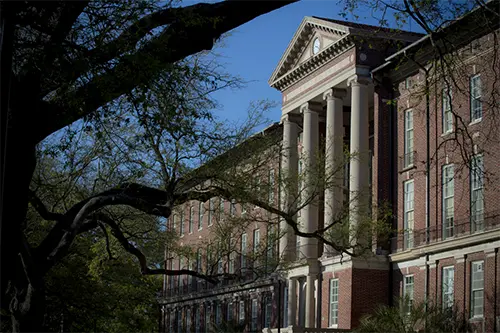

Whether through art, the humanities, or the social sciences, Tulane School of Liberal Arts students learn to wrestle with ambiguity, question assumptions, weigh evidence, and make sense of complexity. Read how professors from across the school advance a common purpose: preparing students to think deeply, adapt thoughtfully, and lead wisely throughout a lifetime of change.
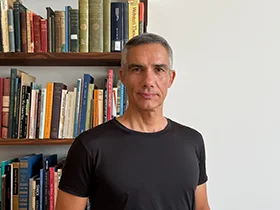
João Enxuto
Assistant Professor, Newcomb Department of Art
A 200-word limit for answering the epochal question—What Does It Mean to Be Educated in This Major Now?—presents a dilemma all students confront today: the pressure to expediently compress complexity into digestible formats. The temptation to outsource the task to generative AI is real. Based on my own chat history and Google activity, Gemini offered: “the role of higher education must fundamentally shift from the transmission of knowledge to the cultivation of critical discernment.” This was a sentiment I could get behind, as if it were my own.
If Gemini has the easy answers, then what exactly are we asking students to solve, and for whom? Is it the immediate demands of a professional landscape in flux, or the long-term task of cultivating a sharp and curious mind? Through teaching new media, I witness digital tools go obsolete almost as quickly as students can learn them. The educational challenge is no longer access to technology but understanding the context of human-machine entanglements and their ethical implications.
With generative A.I., creators encounter sensory worlds that are endlessly reconfigurable. The university is one among many information platforms, yet the liberal arts remain the template for developing the practices and pleasures of cultural work. The drudgery of data dissemination is best left to the bots and server farms. My task is to cultivate aesthetic and critical judgment. These are the values to outlast the next doom scroll, software update, and career crisis.
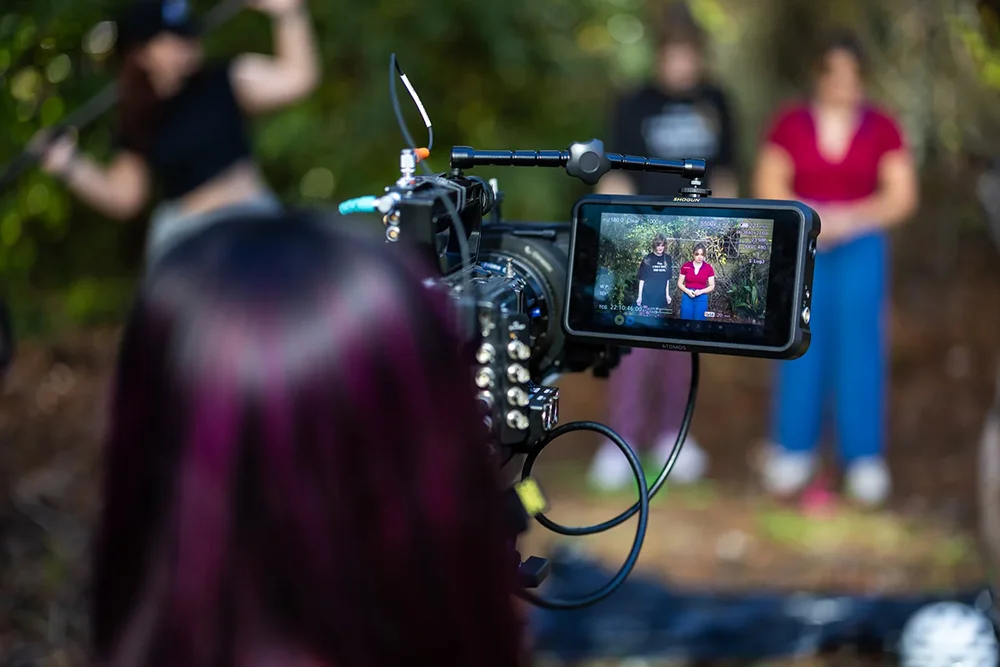
Students gain hands-on experience with digital filmmaking equipment.
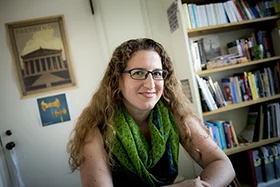
Emilia Oddo
Associate Professor, Classical Studies
Whether we study the literature, history, languages, archaeology, or material culture of the Greek and Roman worlds, through Classical Studies, we teach students that knowledge is constructed through careful interpretation, rigorous analysis, and the patient work of engaging with evidence. An excavated object, a fragmentary inscription, or an ancient text does not simply provide answers; each demands interpretation. A historical narrative invites us to ask whose voices are present, whose are absent, and why. Classical Studies allows students to encounter societies that are both familiar and profoundly different from their own. Across our field, students learn to distinguish observation from interpretation, recognizing that evidence rarely speaks for itself. They learn to weigh competing explanations, revise conclusions when new evidence emerges, and communicate their ideas with clarity, humility, and intellectual integrity. Learning how to distinguish evidence from assumption may be one of the most valuable forms of education we can offer.
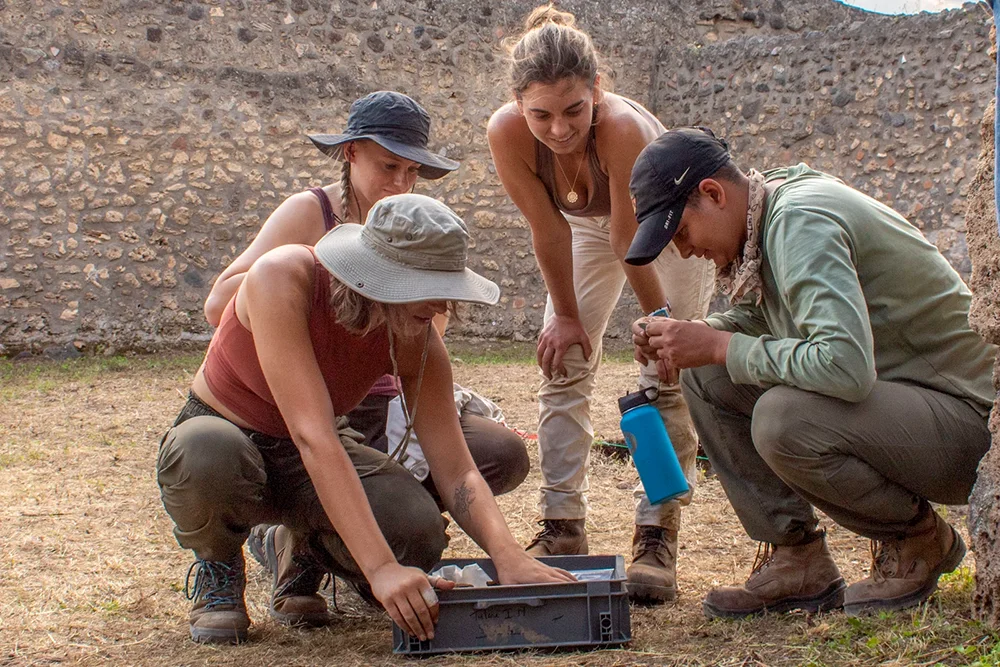
Students perform an on-site excavation in Italy as part of the Pompeii I.14 Project, an international collaboration led by Tulane University.
Dan Burnston
Director and Associate Professor, Cognitive Studies and Philosophy
Education in Cognitive Studies is about flexible knowledge, fluidity across intellectual contexts, and the ability to relate distinct information into a coherent view. In Cognitive Studies, students learn material from psychology, neuroscience, artificial intelligence, and linguistics. They use philosophy to rigorously assess big-picture questions about the nature of the mind. And they think about the societal importance of all of this material in the modern world.
Cognitive Studies prepares students for life in an information-rich world, and for careers that will demand the ability to creatively engage with information to produce knowledge. How do we take the mass of information available to us and use it productively? How should different sources of information be integrated responsibly? What are the responsibilities of individual information users in producing knowledge about the world? And how do we avoid bias in our understanding? All of these questions stem from the nature of the mind and its access to information. The skills that students learn in Cognitive Studies prepare them to excel in the environments that will characterize their adult lives and careers.
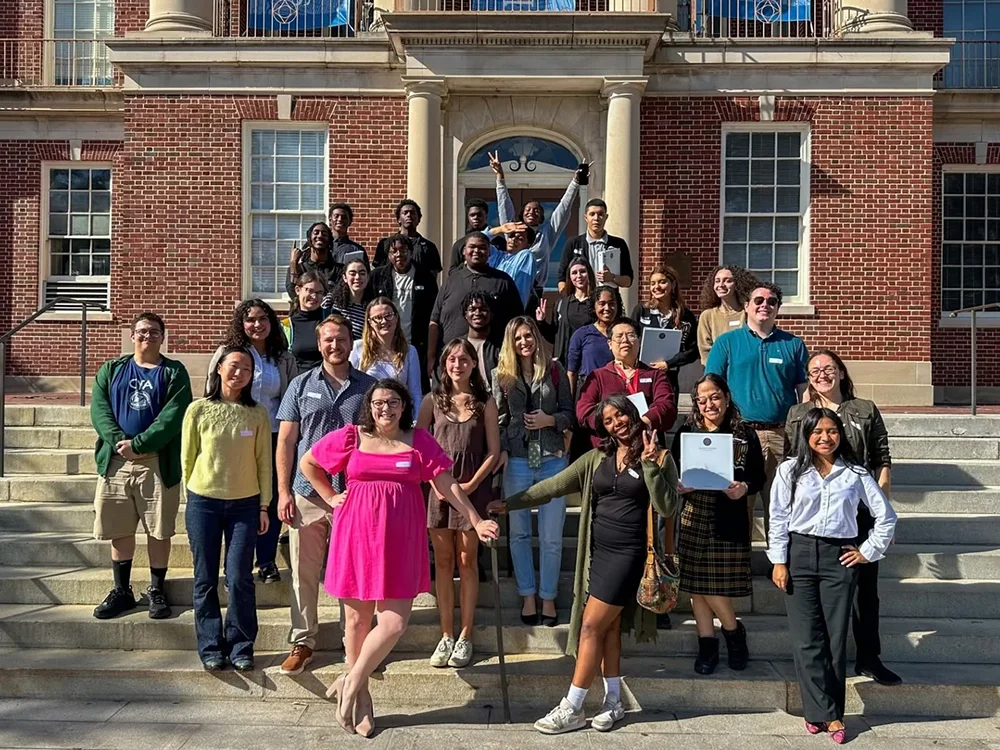
Local high school Ethics Bowl teams came to Tulane for a competition sponsored by the Murphy Institute's Center for Ethics and supported by students in Shoshana Primak's new applied ethics course with service-learning.
Gary “Hoov” Hoover
Executive Director, The Murphy Institute, and Professor, Economics
Studying political economy today means having the ability and tools to make sense of complex interactions between policymakers, our society, and markets. It is the topic most dominating our news cycles. If you think about public policy, you know that there is a policymaker turning a knob and affecting policy.
What policy? We examine them all. It could be trade policy and how the president is changing policy with tariffs. It could be health policy and how the Secretary of Health and Human Services is changing policy through vaccines. There is housing, tax, and education policy, among others. On the other side are markets which see and react to those policy changes. Which markets? All of them. It could be housing markets, insurance markets, labor markets, etc.
Our students need to be trained and have skills that allow them to analyze complex market structures, the nuances of ethical decision-making, and the vastness of our ever-changing political landscape. Political economy majors take School of Liberal Arts standards like economics, political science, history, and philosophy, but also law, public health, mathematics, among others.
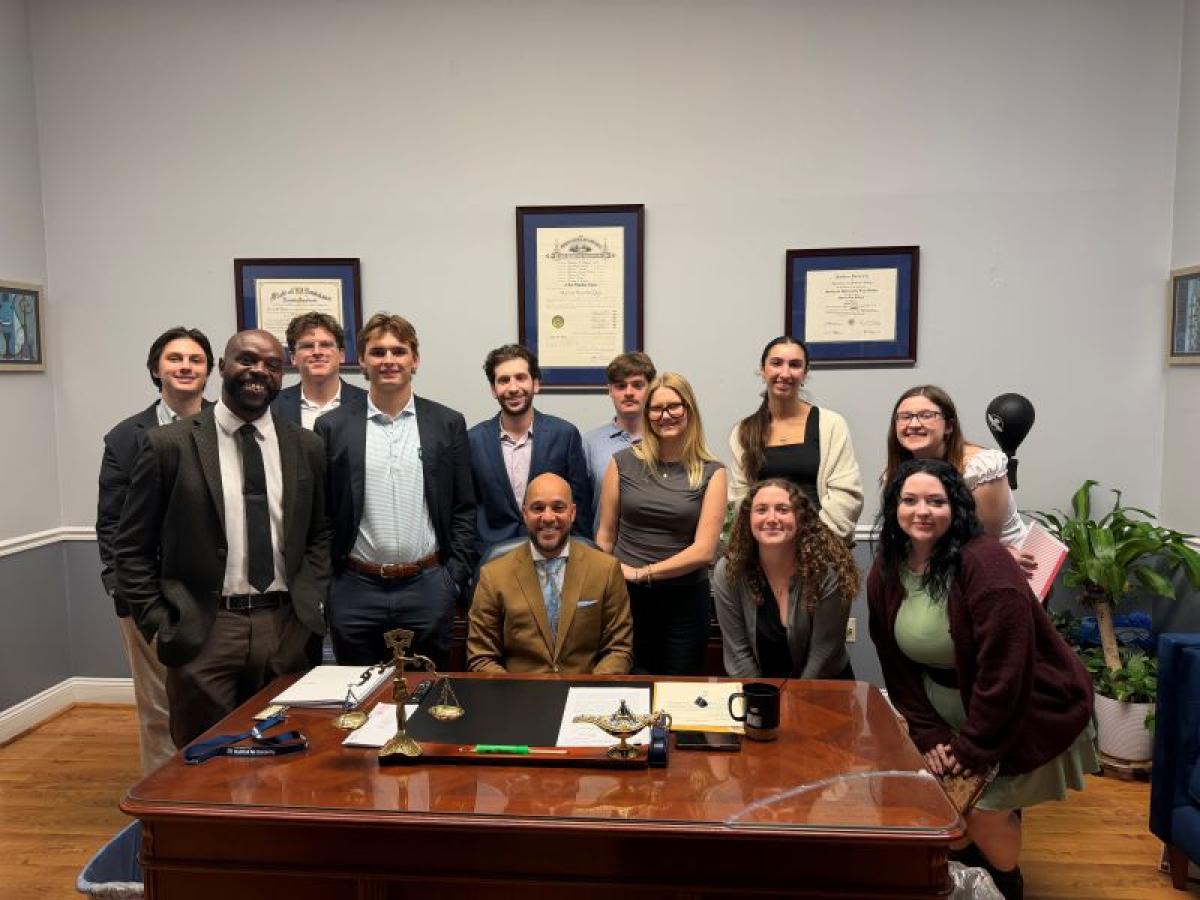
Political Economy students in Professor Carla Laroche's course, Prison Industrial Complex, met with a presiding judge after observing live court proceedings at the Orleans Criminal District Court. The site visit provided students with a firsthand look at the institutional structures studied throughout the semester.