
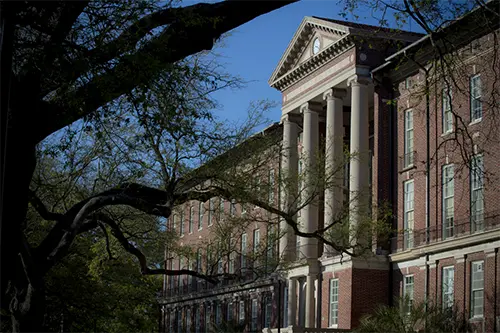
There’s much debate about liberal arts degrees. Yet over and over again, we find liberal arts majors at the top of companies, in government and as non-profit leaders. We caught up with four distinguished Tulane alumni whose careers have taken them through exciting leadership challenges and opportunities. They shared how their liberal arts education prepared them with the adaptability to establish meaningful careers. Years later, that foundation continues to shape their professional and personal lives.
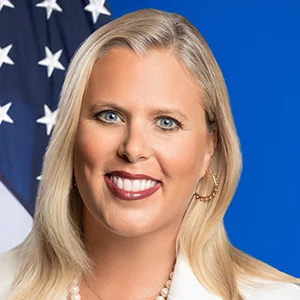
Kimberly Rengel Furnish (NC ’98)
Studio Art major
Career diplomat, currently Deputy Chief of Mission at the U.S. Embassy, The Bahamas
When I was competing for the job here to help to run the U.S. Embassy in the Bahamas, a very high official asked me, “Why should we hire you?”
I said, “I didn’t have your average path to the Foreign Service. I didn’t go to Georgetown; I was a studio art major at Tulane. That gives you an officer who knows how to think broadly, how to think about the world in many dimensions, how to approach people in a creative way, and that really is the heart of diplomacy.”
He gave me the job.
I think creativity and the ability to approach problems from different directions are incredibly important in today's world. Many of the communication and creative skills I learned at Tulane, I apply every single day here.
When I first joined the Foreign Service, I had a mentor who talked about gumbo diplomacy, this idea that when you get to your post, you’re not just conducting formal meetings in a boardroom, but you’re bringing people into your kitchen. It’s about people-to-people ties.
I still have foreign contacts that come into my kitchen. I cook them gumbo, and we talk about things that matter.

Hank Perlman (A&S ’88, P SLA ’30)
English and Philosophy major
Co-founder, Hungry Man Productions
I didn’t know who I was or what I wanted to study when I arrived at Tulane. I gravitated toward the subjects that had fewer right and wrong answers.
English and philosophy taught me how great ideas work: how to express them and break them apart. Learning how to write is learning how to think. And thinking, generating ideas, and communicating are pretty much everything I do.
After Tulane, I took an entry-level job at an advertising agency. In addition to movies, music, and TV, I always loved sports, and I was able to combine everything I enjoyed when I started writing TV commercials for Nike and ESPN. That led to working at MTV and moving from writing to directing and starting a film production company with a fellow director that’s been going strong for 30 years. Our company has produced more Super Bowl commercials than any other.
Liberal arts specifically teaches you how to think in the way artificial intelligence can’t. You’re exposed to original ideas, perspectives, and concepts that encourage critical thinking and help you develop and communicate your own ideas. AI can’t write a good joke or devise a meaningful world view.
I truly believe liberal arts are the best preparation for a career, and that a fulfilling career is essential for a full life. But a liberal arts education offers something more: it makes you a more thoughtful, well-rounded, and wiser person. And it certainly makes you more interesting to talk to at a cocktail party.

Maria Sebastian (NC ’92, P SLA ’27)
Economics and Spanish major, Dance minor
Chief Marketing Officer
Economics, Spanish and dance may seem an unlikely combination for a future chief marketing officer, but in many ways they have defined how I approach my career. I was drawn to a liberal arts education at Tulane because it gave me the freedom to pursue different interests and connect them in meaningful ways. Economics taught me to understand systems, analyze evidence and bring structure to complex problems. Dance further developed my creativity, discipline and confidence, while Spanish added another perspective on culture, communication and the world beyond my own experience.
Since Tulane, I’ve built a global career across industries, including chief marketing roles at Virgin Atlantic, Starbucks EMEA and Greene King. Today I live and work in London, where I've spent the past 20 years leading marketing, branding and commercial functions at Taylor Wimpey.
My liberal arts education shaped how I approach problems: looking at issues from multiple perspectives, questioning assumptions and making connections across disciplines. Marketing and customer leadership sit at that intersection, combining analytical and commercial rigor with creativity, empathy and an understanding of people.
Working across different countries and cultures has reinforced that perspective. An idea that works in one market can’t simply be translated into another; you need to understand the underlying context. History, politics, cultural orientation and social norms shape how people think and behave. That interdisciplinary foundation taught me to look beneath the surface and ask not just what, but why.
The further you progress in your career, the fewer problems have a single correct answer. That’s the enduring value of a liberal arts education: it prepares you not just for your first job, but for the opportunities and challenges you cannot yet anticipate.
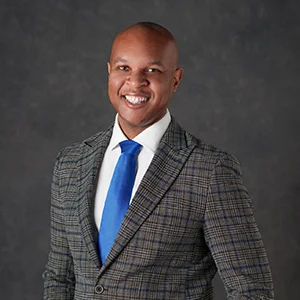
Travis A. Torrence (TC ’02)
Communication and Political Science major
U.S. Head of Legal, Shell
I’ve always been fascinated by people, institutions, and the ways ideas shape our world. Communication and political science felt like the perfect combination because one taught me how messages influence people, while the other helped me understand how decisions are made and power is exercised.
More than anything, Tulane taught me how to think.
In legal practice and business leadership, people often assume the most valuable skill is having the right answer. In reality, the more important skill is asking the right questions. My liberal arts education taught me to examine issues from multiple perspectives, challenge assumptions, evaluate evidence, and communicate ideas clearly.
Whether you become a lawyer, engineer, physician, entrepreneur, journalist, or business executive, your long-term success will depend less on what you know today and more on your ability to learn, adapt, and lead tomorrow.
My own career is a good example. I went from radio to law, from litigation to corporate leadership, and from legal practice to significant nonprofit and community leadership roles. The constant was the ability to think critically, communicate effectively, and adapt to new challenges. That’s the enduring value of a liberal arts education. It doesn’t just prepare you for your first job. It prepares you for a lifetime of change.