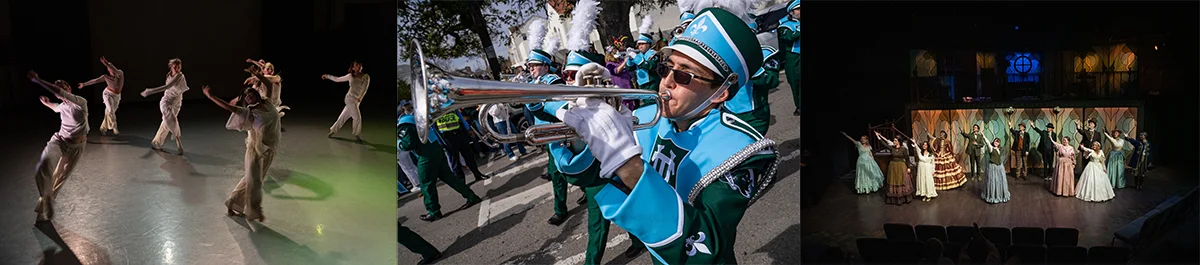

Where Scholarship Takes the Stage
Today, Tulane students might spend the morning studying Shakespeare, the afternoon rehearsing with professional actors, and the evening performing alongside New Orleans musicians or internationally recognized dancers. They move comfortably between the classroom and the stage, between scholarship and creative practice, often without recognizing that these experiences were once separate traditions.
That wasn’t always the case.
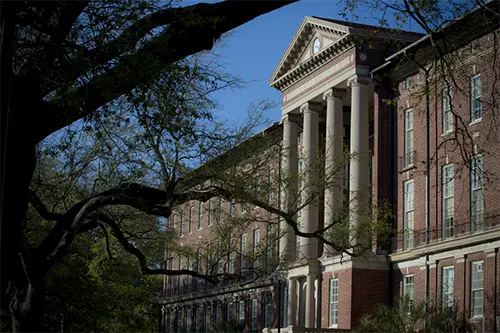
Over more than a century, Tulane’s performing arts have evolved into one of the clearest expressions of what the School of Liberal Arts has become: interdisciplinary, rooted in New Orleans, and committed to the idea that creative practice and academic inquiry strengthen one another.
That story begins with Newcomb College, Tulane’s historic women’s college.
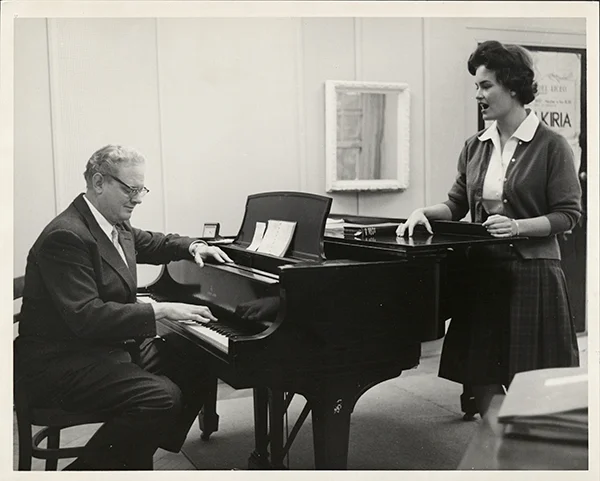
In 1909, Newcomb College established the Department of Music, creating the first music program in New Orleans affiliated with a liberal arts college. Rather than treating music solely as performance, the program combined theory, history, and artistic practice, reflecting a belief that the arts belonged at the heart of a broad education.
The Department of Theatre followed in 1937, building on decades of student-led productions while expanding opportunities in acting, directing, design, and production.
Dance took a different path. Originally housed within Newcomb’s physical education program, dance spent years fighting for recognition as an academic discipline.
Alice Pascal Escher, associate chair of theatre and dance, remembers that struggle.
“The biggest hurdle the Newcomb Dance Program had in my first years was to get academic credit as dance was part of Physical Education. To many academics, dance was nothing but exercise, certainly not an art form... When it was passed by the Newcomb College faculty in the spring of 1985, it was a huge step forward in being recognized as an art form on campus.”
The approval of the dance minor, and later the dance major, reflected more than the growth of a department. It signaled a broader understanding that artistic practice itself generates knowledge, demands rigorous inquiry, and belongs alongside every other scholarly discipline.

When Tulane’s new School of Liberal Arts was established in 2006, Newcomb College’s commitment to integrating scholarship and artistic practice did not disappear. It expanded, creating new opportunities for collaboration across disciplines while building on the foundation Newcomb had established.
For much of the twentieth century, music, theatre, and dance developed along parallel paths. Then they began finding one another.
The strongest artistic work increasingly emerged where disciplines, communities, and professional practice intersected. Collaborative productions, interdisciplinary teaching, and shared creative inquiry blurred the boundaries between music, theatre, and dance while drawing students into experiences that extended well beyond the classroom.
Just as importantly, the performing arts became inseparable from New Orleans itself.
The city is not simply Tulane’s backdrop. It is an extension of the classroom, shaping research, performance, and education while creating opportunities for faculty and students to contribute to the cultural life of New Orleans.
Stories That Spark Dialogue
In 2025, Amy Chaffee, professor of theatre and dance, produced The Turn Away Play, directed by the late faculty member R’Myni Watson, in collaboration with the Newcomb Institute’s New Green Wave Initiative and the School of Liberal Arts, and performed at the Ashé Cultural Arts Center. Based on the best-selling book The Turnaway Study, a longitudinal study of over 10,000 women turned away from abortion care, the show was led by Jenny Mercein, associate professor of Theatre & Dance, as the chief researcher. The production explored the lived experiences of people navigating unintended pregnancy, parenting, relationships, and the systems that shape those choices.
Mercein performed alongside Zoe Ocampo-Sobkoviak (’27), a double major in Theatre & Dance and Environmental Biology, before audiences that remained afterward for conversations with the playwright, researchers, and reproductive rights advocates. The sold-out performances became more than theatre. It became a catalyst for community dialogue.
Preserving and Performing Heritage
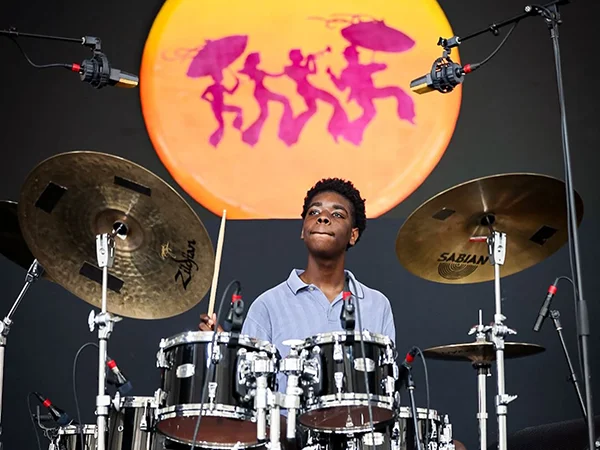
At the 2026 New Orleans Jazz & Heritage Festival, Matt Sakakeeny, chair of the Newcomb Department of Music, interviewed Big Chiefs of the Mardi Gras Indian Nations on the Music Heritage Stage, documenting traditions central to the city’s cultural identity and lending that insight to the news magazine show 60 Minutes. Across the festival, Tulane faculty and students also performed in ensembles spanning jazz, Black American music, klezmer, Latin music, and big band, contributing to one of New Orleans’ defining cultural celebrations while learning directly from the artists who sustain those traditions.
Movement Across Communities
That same spirit shaped the 2026 International Dance Festival New Orleans (IDFNOLA), founded by Leslie Scott, the inaugural associate dean for the performing arts in the School of Liberal Arts. Bringing together international choreographers, filmmakers, performers, and New Orleans artists through performances, workshops, and masterclasses, the festival reflects the same philosophy guiding Tulane’s performing arts: artistic exchange across cultures and disciplines. Faculty, alumni, and students participated throughout the festival, including Carina Kroff (’26), a dance and international relations major who served as a co-producer.
For students, those partnerships are more than opportunities to observe professionals. They are opportunities to become one.
For Sofia Severson, a theatre performance, dance, and history major with a minor in Strategy, Leadership, Analytics, and Management (SLAM), performing as Fleance in this summer’s New Orleans Shakespeare Festival production of Macbeth marked her professional debut.
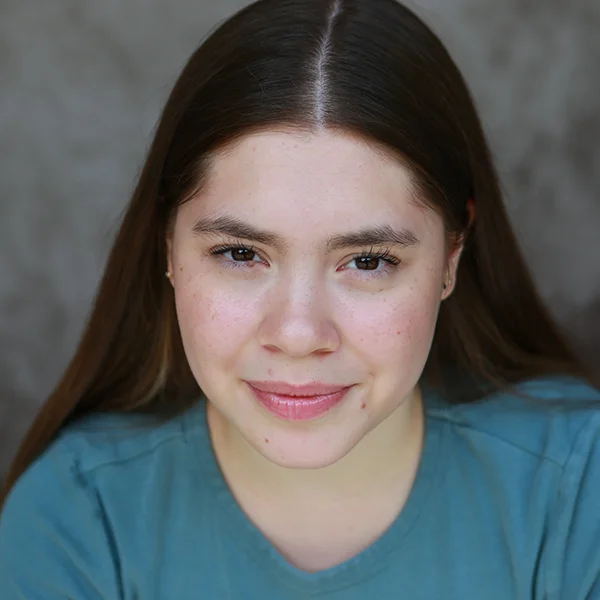
Severson credits Tulane faculty with helping shape both her artistic voice and her professional aspirations. Playing Puck in the department’s production of A Midsummer Night’s Dream, directed by John “Ray” Proctor, associate professor in theatre and dance, deepened her appreciation for Shakespeare’s language and performance. Combined with Shakespeare coursework taught by Jenny Mercein, the experience prepared her to step confidently into a professional company. Working alongside professional actors, directors, and designers in Macbeth gave her firsthand experience of the discipline, collaboration, and creative risk that define a life in the theatre.
“This process was one of the most impactful opportunities I have had during my time at Tulane,” Severson said. “It allowed me to put into practice what I had already learned and gave me a clearer understanding of what professional rehearsals and performances are like. It challenged me as an actor and reinforced how much I want acting to be my career.”
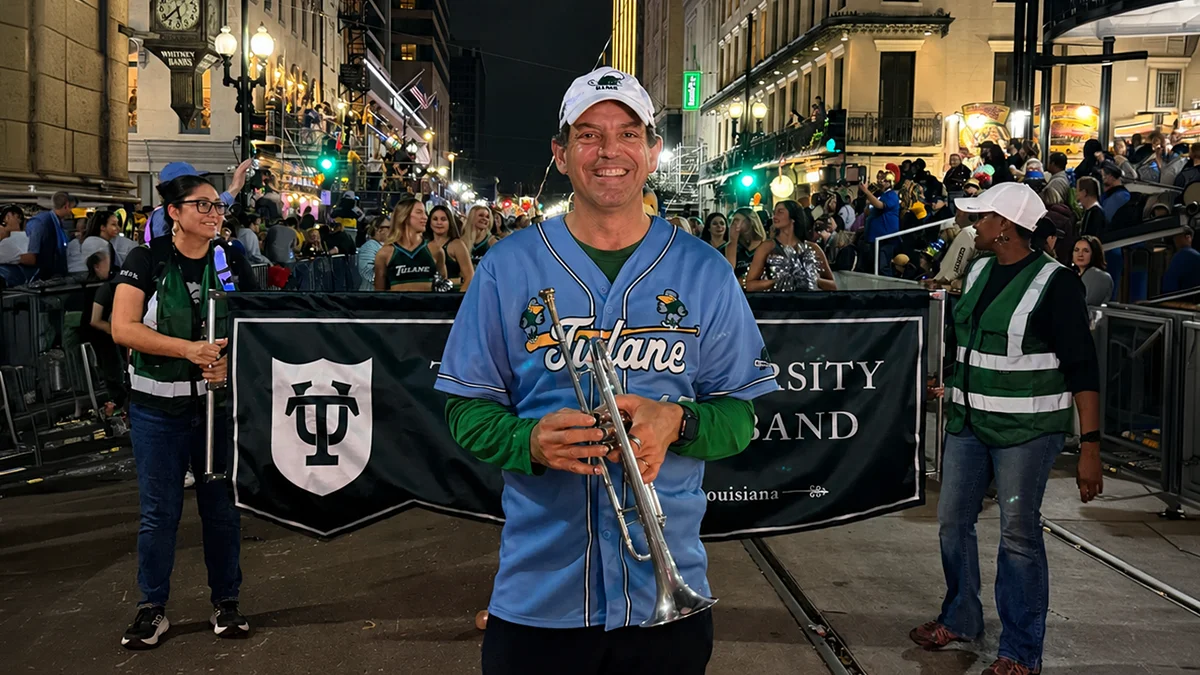
By the time Performing Arts at Tulane was established in 2025, bringing together the Newcomb Department of Music, the Department of Theatre and Dance, Tulane Bands, Summer Lyric Theatre, and the New Orleans Shakespeare Festival, the philosophy behind it had already been taking shape for decades. The initiative recognized the different departments’ shared ethos of collaboration.
Leslie Scott believes that collaborative spirit has become one of Tulane’s defining strengths.
“Tulane has a deep history of performing arts in an incredibly rich cultural city, and our students are the ones who gain the most when that history keeps expanding,” Scott comments. “When artists, scholars, and departments treat each other as collaborators rather than separate disciplines, students learn from working professionals, take ideas across departmental lines, and see the city itself as a place of artistic possibility.”
More than a century after Newcomb College introduced music into the liberal arts curriculum, Tulane’s performing arts have become far more than a collection of departments or performance venues. They demonstrate how the School of Liberal Arts itself has evolved into an interconnected ecosystem where scholarship and creative practice reinforce one another, where New Orleans serves as both classroom and collaborator, and where students learn not simply to perform, but to create, question, and discover.