
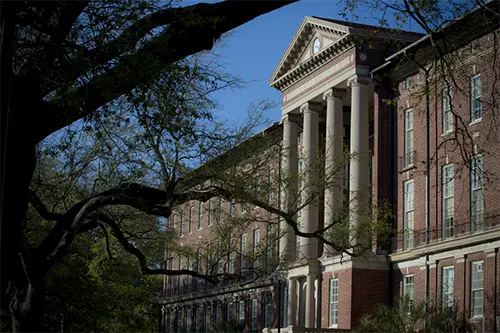
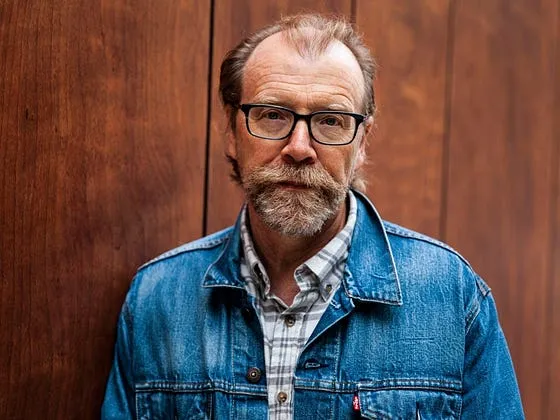
George Saunders — author of Liberation Day, Tenth of December, and the Booker Prize–winning novel Lincoln in the Bardo — will visit Tulane on Thursday, April 9, as this year’s featured writer in the Carole Barnette Boudreaux ’65 Great Writers Series.
The acclaimed fiction writer has been in the spotlight recently with the release of his new novel, Vigil, written in the satirical, otherworldly style that makes him one of the most distinctive voices in contemporary literature. As news circulates about a forthcoming film adaptation of Lincoln in the Bardo starring Tom Hanks as Abraham Lincoln, Saunders has been making the rounds discussing Vigil in interviews and on podcasts, including appearances on The Late Show Book Club and The New York Times’ The Interview.
A recipient of both the Booker Prize and a MacArthur Fellowship, Saunders is known for fiction that blends dark humor and surreal imagination with deeper reflections on the human condition. His latest novel unfolds at the bedside of a powerful oil executive facing the end of his life. As a series of visitors — both earthly and supernatural — force the dying man to reckon with the consequences of his actions, the novel explores themes of accountability, forgiveness, and the long shadow of environmental harm.
Saunders — whom the National Book Foundation once dubbed “the ultimate teacher of kindness and craft” — teaches in the Creative Writing Program at Syracuse University, and publishes a popular Substack newsletter called Story Club, an ongoing exploration of how stories work and why they matter. His thoughtful reflections on writing, often delivered in a soft, conversational speaking style, have made him a favorite guest at literary festivals and universities.
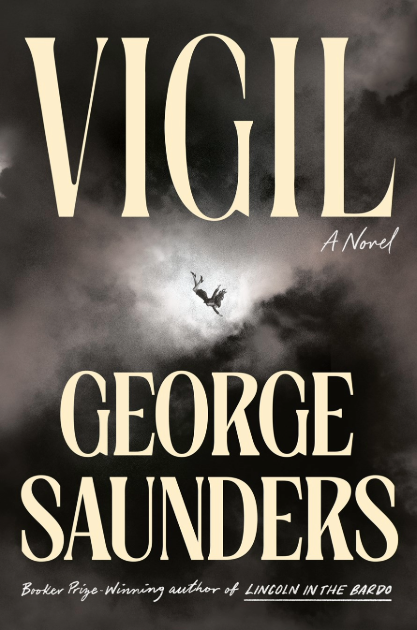
His visit is part of the Carole Barnette Boudreaux ’65 Great Writers Series, which brings leading contemporary authors to Tulane to share their work with students and the broader community — work that often engages with some of the most pressing social and cultural issues of our times. Saunders’ talk will center around his new novel, whose themes of power, accountability, and climate responsibility will resonate with students and readers considering ethical challenges of the present moment.
The event will take place in Kendall Cram at the Lavin-Bernick Center for University Life, followed by a book signing.
Register for the April 9 Event.
Take this quiz to get ready to meet the best-selling author of the moment.
1. What did George Saunders study in college?
A. English Literature
B. Philosophy
C. Geophysical Engineering
D. Journalism
Answer: C. Geophysical Engineering
He studied rocks and data before turning to fiction. Not the usual path, but it stuck.
2. What was he doing in the early 1980s?
A. Teaching creative writing at Colorado College
B. Working in oil exploration in Sumatra
C. Completing a PhD in English literature
D. Working as a technical writer for an engineering firm
Answer: B. Working in oil exploration in Sumatra
He graduated from the Colorado School of Mines in 1981 and spent a few years working in overseas oil exploration. Perhaps the real jungle prepared him for publishing’s concrete one?
3. Which of the following was NOT one of Saunders’ jobs before he was published?
A. Slaughterhouse worker
B. Doorman
C. Investment banker
D. Roofer
Answer: C. Investment banker
No hedge funds or corner offices — just a run of jobs that gave him a close view of how people get by.
4. At what age was his first book, CivilWarLand in Bad Decline, published?
A. 25
B. 30
C. 37
D. 45
Answer: C. 37
Saunders was married with children, working at a day job as a technical writer for an engineering firm and writing on the side before his first book of short stories was published.
5. Saunders is a practitioner of which spiritual tradition?
A. Zen Buddhism
B. Tibetan Buddhism
C. Hinduism
D. Stoicism
Answer: B. Tibetan Buddhism
It’s not just an interest but a framework he returns to often. You can feel it shaping the way he thinks about people and choice.
6. What is a defining feature of Saunders’ writing process?
A. He writes first drafts in one sitting and rarely revises
B. He collaborates with co-authors
C. He relies heavily on improvisation
D. He revises extensively over many drafts
Answer: D. He revises extensively over many drafts
He revises extensively, adjusting each sentence until it feels right. For him, writing improves through careful, repeated refinement rather than speed.
7. His famous 2013 speech “Congratulations, by the way” centers on what theme?
A. Career ambition
B. Political responsibility
C. Kindness
D. Creativity
Answer: C. Kindness
It reflects the same instinct behind his writing, a belief that paying closer attention to others can lead to greater compassion. In both the speech and his stories, kindness shows up in small, everyday choices rather than big gestures.