
School of Liberal Arts March 20 Newsletter

Tulane School of Liberal Arts Newsletter

Impact Across Disciplines

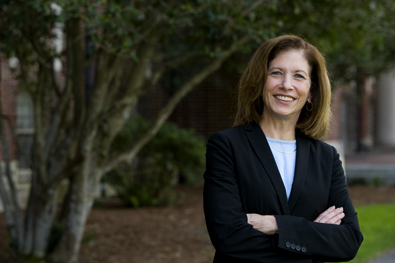
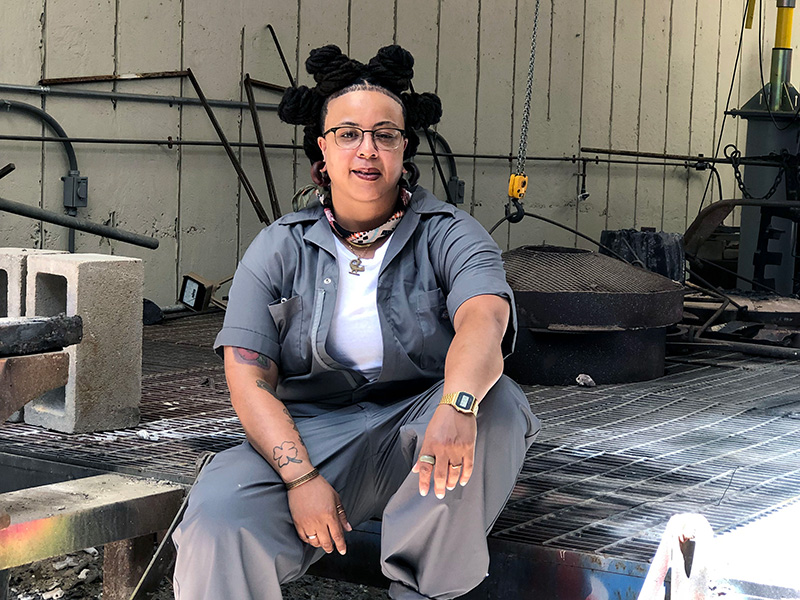
Stephanie Porras, Newcomb Art Department chair, and Mia Bagneris, Africana Studies Program director

$1M Grant Will Fund New Liberal Arts Graduate Program in Africana Studies & Art

The Mellon Foundation awarded a four-year, $1 million grant to the Africana Studies Program and Newcomb Art Department for the development of the Crossroads Cohort, in which students can pursue novel graduate study at the intersection of both disciplines.


Students Recap Key University Events

Old guys talk a lot

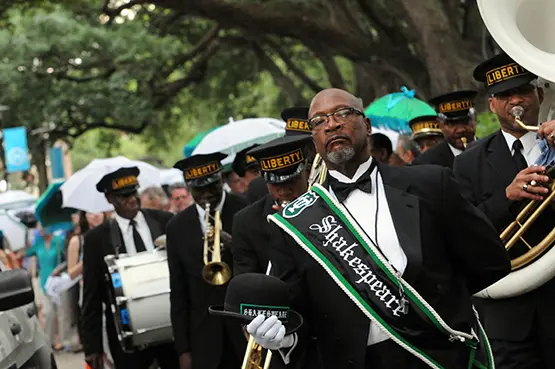
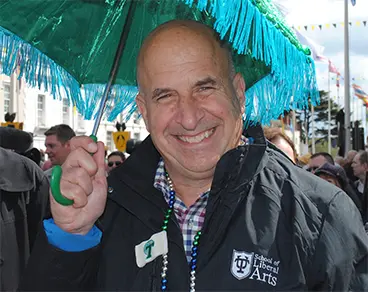
Liberal Arts Take 2024 Book Fest Stage

Four English majors share their highlights from last weekend's "Mardi Gras for the Mind," which saw a plethora of School of Liberal Arts faculty, staff, and alumni featured on panels throughout Tulane's third literary festival.

Participants of Gulf Coast Connections Conference visit local sites

Third Gulf Coast Connections Conference

Political Science & Environmental Studies double major Lucie Jain (SLA '26) reflects on this interdisciplinary event addressing how environmental thinking impacts community. Hosted by Tulane, in collaboration with Rice University.


Department of Theatre & Dance – Box Offices Highlights

Event poster for Only Miracles

Only Miracles: April's Interactive Historical Experience Created by MFA Candidate

In this three-part immersive theater experience written and directed by department instructor Dodd Loomis, visitors are transported back to the real-life journey of two Holocaust survivors.

The show is produced by the Department of Theatre & Dance at Tulane, the Stuart and Suzanne Grant Center for the American Jewish Experience, and Touro Synagogue.

Event poster for Sweeney Todd

Lineup for 57th Season of Summer Lyric Theatre at Tulane Announced

Head to the box office today to secure your seats for our 2024 Summer Lyric Theatre weekend productions of Sweeney Todd, Anything Goes, and Pippin.

When temperatures rise, NOLA theaters cool down. Join us Uptown for monthly musicals directed by prominent faculty and engaged performing arts alumni!


Give green April 10–11, 2024

Save the Date for #GiveGreen2024!

Donations on #TUGiveGreen2024 help fund groundbreaking research, support program and event growth, and develop vital scholarship opportunities through our Annual Fund. Along with the fun of maintaining friendly bragging rights for most individual gifts, this Tulane competition has a major impact on the School of Liberal Arts, and we can’t do it without you!


Facebook
X, formally known as twitter
Instagram
Tulane University School of Liberal Arts
Tulane School of Liberal Arts

102 Newcomb Hall • New Orleans, LA 70118  
liberalarts.tulane.edu 

Amnesty International Publishes Film by Digital Media Practices Director Casey Beck

Casey Beck’s film “Smells Like” is the poignant story of Juan Flores, an activist fighting for his community’s basic right to clean air. Residing in one of the Gulf South’s “fenceline communities” — neighborhoods that share a backyard with the nation’s biggest oil refineries and petrochemical plants — Flores and his neighbors have spent decades exposed to toxic air pollution causing serious risks to their health.

On January 25, 2024, Amnesty International published Beck’s film as part of a larger report entitled The Cost of Doing Business? The Petrochemical Industry’s Toxic Pollution in the USA, detailing the health and human rights consequences posed to populations living along the Houston Ship Channel, where Flores resides. An award-winning documentary filmmaker, Beck is the director of the Tulane School of Liberal Arts popular Digital Media Practices (DMP) program. Her 16-minute film brings an essential element of humanity and personal narrative to the comprehensive report.

Home to over 600 petro-chemical plants, the 52-mile Houston Ship Channel is labeled a “sacrifice zone,” due to high pollution levels that disproportionately impact Black and Brown communities. The report coincides with a Human Rights Watch publication on Louisiana’s Cancer Alley, another crisis-level “sacrifice zone,” and emphasizes the “devastating human rights toll” on residents in these areas, where populations suffer heightened rates of asthma, cancer, and other diseases, with little to no accountability from the petrochemical industries polluting them. The report criticizes these zones as “a manifestation of environmental racism,” where the rights of marginalized people are sacrificed or ignored in exchange for corporate profit. Fenceline communities like those in Flores’ Harris County, Amnesty International reports, have an average life expectancy that is 20 years lower than those in majority white neighborhoods 15 or so miles away.

“Smells Like” is an activist’s fight for the well-being of his family and community; the film recounts the damage of deadly chemical spills and long-term effects of pollution on residents, including Flores’ young daughter. In a business-centric state like Texas, Flores says, plants continue to push job creation as an excuse for overlooking human rights issues. He otherwise describes his neighborhood as a safe, small community where everyone knows each other, and he challenges the notion that residents should abandon their homes due to environmental hazards — instead advocating for their rights and safety. Flores leads an initiative distributing air quality monitors to households throughout his community.

As the director of DMP, Beck shows her students the power of visual storytelling in compelling audiences to confront uncomfortable truths and advocate for change. Within the program, students are given the opportunity to explore various forms of content creation and media production through workshop-style classes, developing and refining skills in filmmaking, screenwriting, audio production, interactive media, game design, podcasting, and interdisciplinary media.

Produced by Mary Cardaras, funded by the Pulitzer Center and Invoking the Pause, and in partnership with Public Health Watch, “Smells Like” is part of a series Beck is directing on the intersection of environmental issues and race.

Watch Beck’s film.

The Cost of Doing Business? The Petrochemical Industry’s Toxic Pollution in the USA

SLA Faculty Receive Tulane’s Equity, Diversity, and Inclusion Awards

The best academic leaders know how to challenge the narrative — especially in fields largely dominated by white voices — in order to work towards a more racially and culturally accurate picture of the humanities.

Tulane’s Equity, Diversity, and Inclusion (EDI) awards were created to recognize such initiative and leadership within the Tulane community. This year, two of those awards went to John “Ray” Proctor and Charles Mignot: School of Liberal Arts faculty members who — from the performing arts to language learning — stand out for the way they create spaces that are inclusive and representative of all students; center minoritized people and highlight their accomplishments; and emphasize overall care and advocacy of students' valuable contributions in academia and beyond.

John "Ray" Proctor - leftJohn “Ray” Proctor, an Assistant Professor of Theatre, received the North Star Faculty EDI Leadership Award for his commitment to EDI on Tulane’s campus and within the wider New Orleans community. Proctor, who actively participates in events such as Black student graduation ceremonies and orientations for queer and BIPOC students, served as EDI Director for the 2023 inaugural Newcomb Tulane College Summer Research Institute: EDI and Race — a program aimed at expanding student understanding of EDI and the impacts of race on scholarly research. Last spring, he also organized the Rac(e)ing Shakespeare workshop, which invited scholars to explore race within Shakespearean research and performances in the Southern United States

In addition to these events, Proctor also collaborates with the New Orleans Center for the Gulf South (NOCGS) each February as co-organizer of the “African American Women Affecting the Arts” event.

“This gathering reflects his and our interest in centering Black women’s creative expression and experiences and bridging the academic and public,” said NOCGS Clark Executive Director Rebecca Snedeker. “Dr. Proctor is a visionary, kind, dependable, and fun partner, and we deeply appreciate this ongoing collaboration.”

Andrea Boyles, Associate Dean for Diversity, Equity, and Belonging (EDB) for SLA, nominated Proctor for the EDI award. Also mentioning Proctor’s partnership with No Dream Deferred, a local African American theater company, Boyles says that this award honors “the many ways Ray routinely invests labor and time towards equitably advancing the experiences and overall quality of life for minoritized and underserved people across communities.”

In New Orleans — where Francophone heritage includes Creole, Haitian, Acadian, and Caribbean populations, to name a few — an inclusive and diverse study of French culture and language feels all the more crucial.

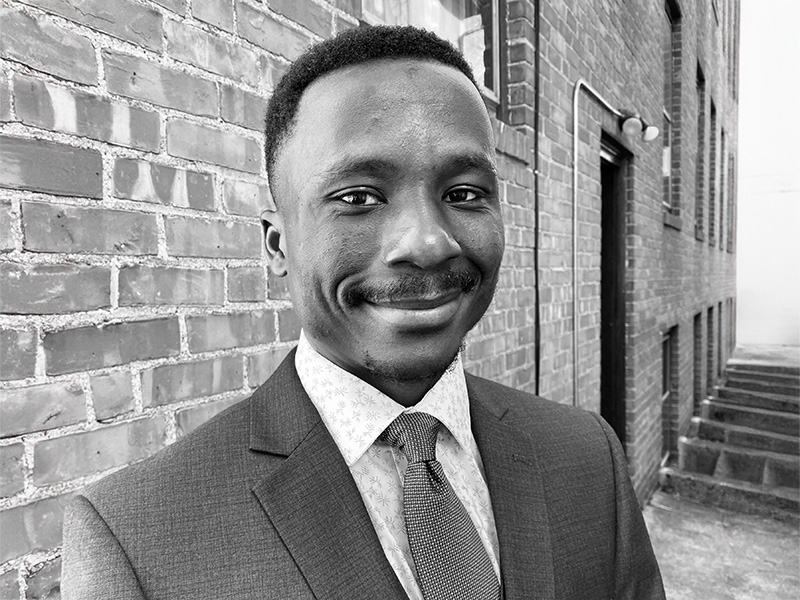
Charles Mignot - leftCharles Mignot, Senior Professor of Practice in French, Director of Linguistics, and Director of the French Language Program, received the Compass Faculty EDI Excellence in Teaching Award, recognizing his success with incorporating EDI methods into his pedagogy. Juliette Papadopoulos, a Ph.D. candidate in French Studies who nominated Mignot, praised his focus on diversity within his courses, where he regularly challenged colonial and Eurocentric views. In an intermediate French class, for example, Mignot encouraged Papadopoulos to include an intercultural module on the topic of race in France, allowing her to dedicate time to teaching the issue. The topic proved very engaging.

Promoting regular practices of co-teaching and collaboration, Mignot encourages his graduate students to contribute to the curriculum, fostering an inclusive environment where mentees create their own intercultural lessons for the classroom — such as the one Papadopoulos led on indigenous tourism and reconciliation efforts in Canada. Through Tulane’s Language Learning Center, Mignot also developed Francophones à la Nouvelle-Orléans (previously Français à la Nouvelle-Orléans) for beginner French speakers. Online courses in this Open Education Resource focus on communication skills rather than traditional grammar structures and promote accessible language learning for all. Within this resource and other teaching materials, Papadopoulos commended Mignot for providing students with a “more global and more inclusive vision of the Francophone world, while questioning the historical whiteness and Eurocentric perspectives that have dominated the French curriculum.”

In a city steeped in diverse cultural influences, the recognition of faculty members like Dr. Proctor and Dr. Mignot speaks to SLA’s commitment to fostering an inclusive academic community, celebrating diversity and minority voices, and valuing the labor and leadership it takes to advance such efforts.


Subscribe to