

Job Announcement: The Doris Z. Stone Postdoctoral Fellowship
The Doris Z. Stone Postdoctoral Fellowship aims to foster emerging scholars’ professional development, enrich the dynamic research environment of the Middle American Research Institute (MARI), and promote intellectual exchange within the Institute’s academic community. We are committed to supporting early-career scholars from diverse backgrounds, particularly those from historically or geographically underrepresented or Indigenous groups, who are conducting innovative anthropological research in Mesoamerica or Central America, regions where Doris Z. Stone made significant contributions in archaeology, anthropology, and linguistics.
Research Focus
This cycle’s fellowship will focus on epigraphy. We seek a scholar whose research centers on deciphering, analyzing, and interpreting Maya hieroglyphic writing and/or other Mesoamerican writing systems. Applicants might work on topics such as:
- Maya hieroglyphic inscriptions and their historical, political, and archaeological contexts
- Iconography and the relationship between text and image
- Historical linguistics and the languages of the hieroglyphic corpus, including connections to living and historically-attested Mayan languages
- Scribal practice and the materiality of writing on monuments, ceramics, and other portable objects
- Digital and computational approaches to documenting, cataloging, and analyzing inscriptions
Applicants whose work integrates epigraphy with archaeology, linguistics, or art history are especially welcome, as is research that uses MARI’s collections, archives, or library. A strong fieldwork component is also encouraged.
We also welcome candidates whose research aligns with MARI’s broader mission to:
- Investigate the Indigenous history, languages, and cultures of Mesoamerica and Central America.
- Steward its archaeological and ethnological collections.
- Develop educational programs and events to inform the public about the region’s Indigenous heritage.
Appointment
The Middle American Research Institute and the Stone Center for Latin American Studies invite applications for a one-year postdoctoral fellowship (renewable for a second year) for the 2027 to 2028 academic year. Fellows will be appointed within the Stone Center for Latin American Studies and housed at MARI. Selection will be based on intellectual merit, the potential impact of the applicant’s research and teaching, and alignment with MARI’s strategic goals. The ideal candidate’s research should complement areas of strength within Tulane’s faculty associated with the Institute.
This is a full-time, residential fellowship with a salary of $55,000 plus benefits, renewable for a second year based on performance and available funding. Travel and moving expenses are not covered.
How to Apply
Applicants should submit:
- Curriculum vitae
- A cover letter detailing research interests, teaching experience, administrative experience, and contributions to the Center’s interdisciplinary mission
- Graduate transcript
- Two letters of recommendation
- A writing sample
- A proposal for teaching at least one course or seminar
- Teaching evaluations (if available)
For details on the Doris Stone Postdoctoral Fellowship, contact Dr. Marcello A. Canuto, Director of MARI, at mcanuto@tulane.edu or 504-862-3104. The application deadline is .
Tulane University is an equal opportunity/affirmative action/ADA employer, committed to diversity and excellence. All eligible candidates are encouraged to apply.
For the full description and to apply visit: Doris Z. Stone Postdoctoral Fellowship job posting
Current Fellows
Doris Z. Stone Post-Doctoral Fellow
Adrian S.Z. Chase
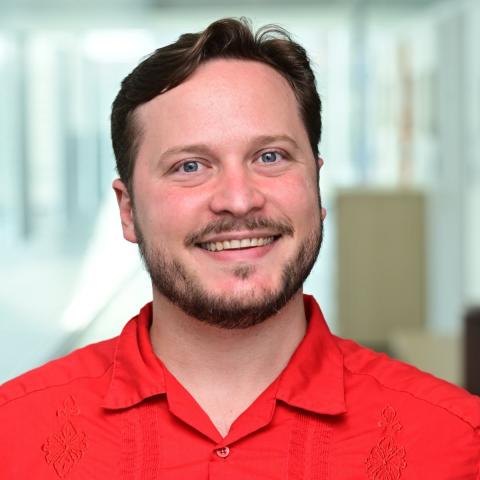
Dr. Adrian S.Z. Chase is currently Doris Stone Postdoctoral Fellow of the Middle American Research Institute and the Stone Center for Latin American Studies at Tulane University. He received AB from Harvard College in 2012, his MA from Arizona State University in 2014, and his PhD from Arizona State University in 2021. Before coming to Tulane University, he was a Visiting Assistant Professor at Boston University and before that a Postdoctoral Scholar/Fellow in the Mansueto Institute for Urban Innovation and Department of Anthropology at the University of Chicago.
Dr. Chase is an anthropological archaeologist studying urbanism among the ancient Maya through the use of lidar datasets, excavated materials, and computational methods. His current research focuses on urbanism at the Maya city of Caracol, Belize – and its extensive database deriving from forty years of archaeological investigation – to better understand urban life. His interest in combining computational methods with archaeological data began during his undergraduate degrees in Anthropology and Computer Science from Harvard College, and has persisted throughout his academic career. This interest has led him to investigate ancient Maya urbanism by combining lidar and archaeological data to reconstruct and test for ancient neighborhoods, examine urban services and their provisioning, and analyze shifts between collective and autocratic governance. In addition to archaeological investigations at Caracol, he has participated in field research at Hirbemerdon Tepe in Turkey and at both Chichén Itza and Teotihuacan in Mexico.
Global Digital Heritage Initiative Postdoctoral Fellow
Rodrigo Piedrasanta Guzman
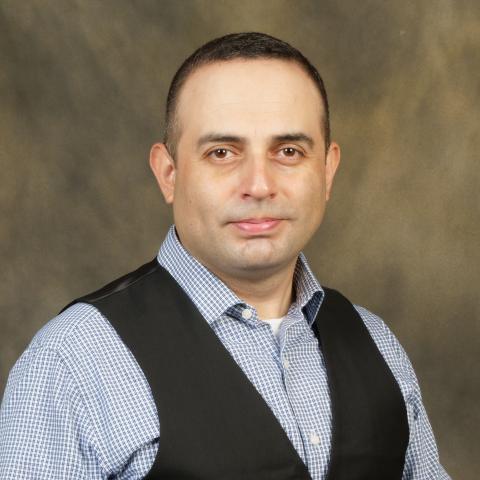
Archaeologist from Quetzaltenango, Guatemala, and currently serves as the Global Digital Heritage Initiative Postdoctoral Fellow at the Middle American Research Institute at Tulane University. Previously, he was a postdoctoral scholar in the Department of Anthropology at the University of Central Florida (UCF) from 2022 to 2025. He earned his PhD from UCF in 2022 as a member of the inaugural cohort of the Integrative Anthropological Sciences program and the first international student. He also has a Master of Arts degree in Anthropology from UCF (2017) and an undergraduate degree in Archaeology from Universidad del Valle de Guatemala (2010). Rodrigo Guzman specializes in Maya Archaeology, Landscape Archaeology, and the application of Geographic Information Systems (GIS) to Archaeology and Cultural Heritage. His field expertise includes mapping in the Maya Lowlands at Holmul, La Corona, Holtun, El Encanto, and El Mirador; archaeological survey in the Maya Highlands at El Soch; and research in the Maya Pacific at Rio Seco. He has also participated as a GIS specialist in remote research in the US Virgin Islands. He also serves as a GIS advisor for the UCF-El Mirador Archaeological Project. He is a registered professional archaeologist in the United States and is affiliated with the Register of Professional Humanists of Guatemala.