

Education
Biography
Alexis Culotta specializes in the art and architecture of sixteenth-century Rome. Her research investigates the working relationships of artists and how the tensions of competition, collaboration, and innovation drove artistic and architectural practice in the Eternal City and beyond. More generally, her research and teaching interests include all topics relating to the Renaissance and Baroque eras, but of particular appeal are the Renaissance reception of and response to antiquity, the modes of workshop exchange during the era, and the reach of and reaction to period thought around the globe, and the benefits of digital humanities applications within the field. Of parallel interest is the evolution of Renaissance and Baroque ideologies into the eighteenth century among Italian artists amid the rise of the Grand Tour and the convergence of the art and souvenir markets.
Her first book, Tracing the Visual Language of Raphael’s Circle to 1527 (Brill, 2020), explored how the Renaissance artist’s style – one infused with borrowed visual quotations from other artists both past and present – proved influential in his relationship with associate Baldassare Peruzzi and in the development of the artists within his thriving workshop. Shedding new light on the important, yet often-overshadowed, figures within this network, this book calls upon key case studies to illustrate how this visual language and its recombination evolved during Raphael’s Roman career and subsequently served as a springboard for artistic innovation in the years following Raphael’s death.
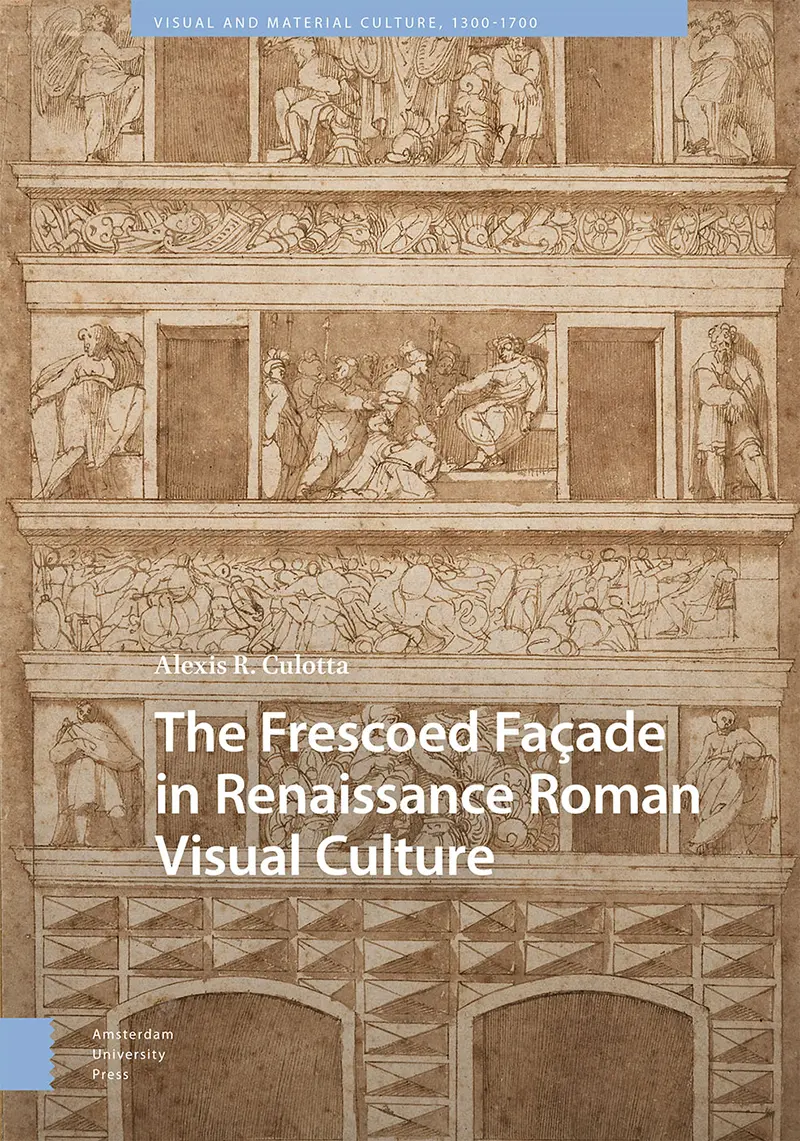
That work resulted to two subsequent trajectories, the first of which yielded her second book, The Frescoed Façade in Renaissance Roman Visual Culture (Amsterdam University Press, 2025) that traces an often-overlooked visual tradition intertwined the intersections of urbanism, art, and identity. Facets of this work will also soon be available in digital database form in conjunction with her other research track in the field of digital humanities. Core to this aspect of her work is the collaborative development of the Artistic Network Toolkit (ANT), which aims to democratize access to advanced network visualization tools for art history and humanities students, scholars, and enthusiasts.
In addition to teaching and research, Alexis serves as the departmental coordinator for undergraduate and graduate internships at museums and cultural institutions across New Orleans and nationally. Prior to coming to Tulane, she taught at the School of the Art Institute of Chicago, Northern Illinois University, and the Newberry Library.
Recent Distinctions
Digital Humanities Fellowship, I Tatti - The Harvard University Center for Renaissance Studies (2027)
Getty Library Research Grant, The Getty Research Institute (2026)
Samuel H. Kress Research Fellowship in Art History, Renaissance Society of America (2025)
Lurcy Affiliated Fellowship, American Academy in Rome (2024)
Publication Subvention Grant, New Foundation for Art History (2024)
Digital Humanities Advancement Grant - Phase II, National Endowment for the Humanities (January 2024 - December 2025)
Recent and Forthcoming Publications
"Reworking Religiosity: Raphael's Late Altarpieces and the Workshop Perspective," in S. Cody and T. Lynn Hunt, eds., The Mannerist Altarpiece: Painting and Religious Experience in Sixteenth-Century Italy (Amsterdam: Brill, 2026).
“Contextualizing the Cappella Cesi: Sangallo, Façades, and Renaissance Collaboration,” Renaissance Studies (July 2025).
The Frescoed Façade in Renaissance Roman Visual Culture (Amsterdam: Amsterdam University Press, 2025).
"Marcantonio Raimondi's Naked Youth and its Sources," Print Quarterly, vol. XLI (2024).
“Haec Domus Expectet: The Casa Sander Façade and Constructing Sixteenth-Century German Identity in Rome,” Opus Incertum 8 (1) (2022).
“The Early Modern Italian Influence on New Orleans' Art Collections,” in L. Estevez, ed., Collecting, Conserving, Documenting, and Exhibiting Early Modern Art in the Southern US (UK: Cambridge Scholars Publishing, 2021).
Tracing the Visual Language of Raphael’s Circle to 1527 (Amsterdam: Brill, 2020).
“Self-Fashioning from the Screen into the Studiolo: Reframing the Renaissance in Remote Learning.” Sixteenth Century Journal vol. 51, no. S1 (Summer 2020).
Digital Scholarship
With co-author Aron Culotta, “Artistic Network Toolkit (ANT): Democratizing Network Modeling in Art Historical Scholarship” submitted to Digital Humanities Quarterly 19.2 (June 2025)
“Raphael and His Roman Workshop," The Renaissance World - Routledge Resources Online, ed. by S. Sutherland and K. Poole (Routledge, 2022)
Contributions to the Art Market Dictionary/Bloomsbury Art Markets (2022)
Michelangelo - Studies for the Libyan Sibyl: Smarthistory
The Role of the Workshop in Italian Renaissance Art: Smarthistory
Preparatory Drawing During the Italian Renaissance, An Introduction: Smarthistory
Media Highlights
Molly McRory, "Tulane faculty honored at the 2025 Research, Scholarship and Artistic Achievement Awards ceremony" (Tulane News, 14 November 2025)
Jeanne Excinios, "How Tulane Historian Alexis Culotta Is Rethinking Art History Through Digital Networks" (Tulane Innovation Institute, January 2026)
Pam Radtke, "A match no algorithm could predict: Tulane professors built a partnership on collaboration" (Tulane News, 13 February 2026)
"Q&A: Alexis Culotta on Renaissance Rome, digital humanities and the I Tatti Fellowship" (Tulane News, 14 July 2026)
Stacey Plaisance, "From volcano warnings and lost burial grounds to organ transplants, Tulane researchers harness AI to tackle real-world challenges" (Tulane News, 21 September 2026)
Courses
- The Art of the Digital Humanities
- Canon in Crisis: Challenging the Tenets of Art Theory
- Historical Survey of the Arts I
- Historical Survey of the Arts II
- Legacy Lines: Researching Art Provenance
- Museum Internship Seminar
- Object(ive) Data: Collections, Databases and Museums