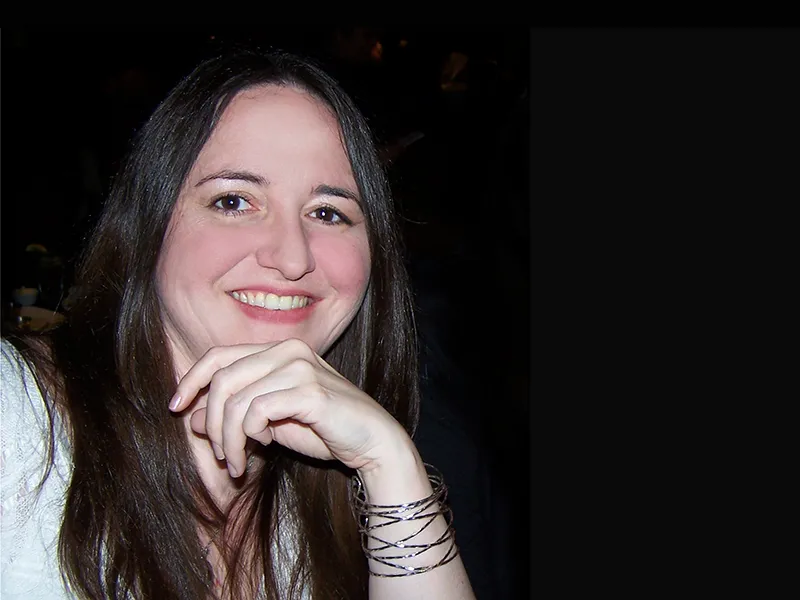

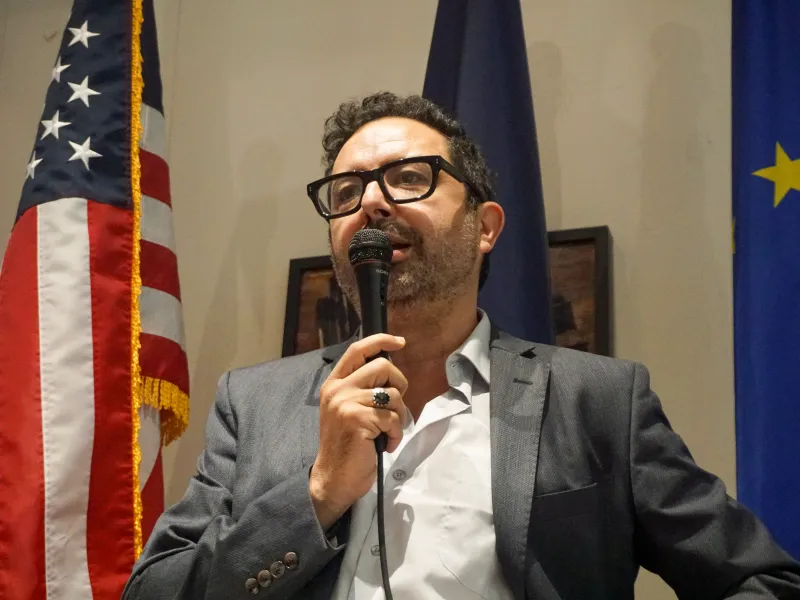
Fayçal Falaky is a Moroccan-born Associate Professor of French at Tulane University and current Director of the Middle East and North African Studies (MENA) Program. He specializes in eighteenth-century French literature, culture, and political thought, with a particular interest in the intellectual and cultural relations between Enlightenment Europe and the Arab-Islamic world. He is the author of Social Contract, Masochist Contract: Aesthetics of Freedom and Submission in Rousseau and co-editor of Modes of Play in Eighteenth-Century France, Diderot and Landscape, and Diderot et l’archéologie. He also serves as co-editor of Diderot Studies.
His research engages questions of Islam, Arab culture, colonial discourse, and cross-cultural representation in early modern and Enlightenment thought. He is the author of several articles and reference entries on these subjects, including work on representations of Islam, Wahhabism during the Enlightenment, captivity narratives in North Africa, and religious tolerance in eighteenth-century Europe. His current book project explores the intellectual genealogy of modern acceleration, tracing how Enlightenment thinkers gradually transformed movement, circulation, and restless activity into signs of vitality, progress, and modern life.
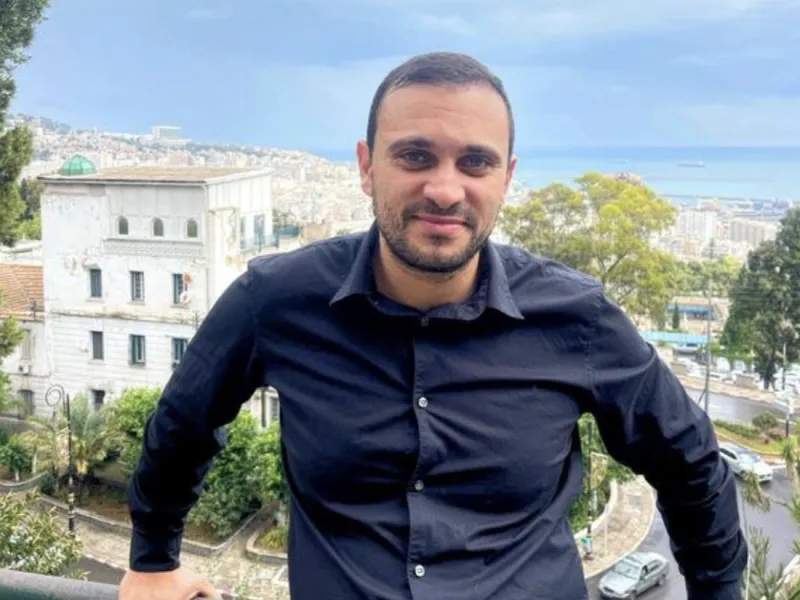
Brahim Afrit is a Visiting Scholar. He holds a Ph.D. in religion from the University of Florida, an M.A. in Public Affairs, a B.A. in Middle Eastern Studies from Sciences Po Paris, and an MSc in Social and Digital Entrepreneurship and Innovation from HEC Paris. Brahim's scholarship engages with the relationship between religion, the state, and society, with a focus on the Maghreb in its broader African, Mediterranean, and Middle Eastern contexts. Situated at the intersection of political sociology, anthropology, literature, history, postcolonial studies, and theology, and drawing on ethnographic, archival, and literary methods in comparative and cross-disciplinary perspectives, his research has been published in several peer-reviewed outlets in the United States and Europe, including Albin Michel (2025), Oxford University Press (2026), De Gruyter (2026), and Archives des Sciences Sociales des Religions (2026). His book project Citizens of God (currently under consideration by a U.S.-based publisher) examines post–Black Decade Algeria’s ongoing state-led religious reforms and their efforts to align “being Muslim” with “being a good citizen” in the post-9/11 Maghrebi context. Brahim's scholarship encompasses a wide range of scholarly interests, including education, culture, gender, politics, and international relations. Outside academia, Brahim has also served as a public officer in the diplomatic field across more than a dozen countries in the MENA region, and as a social entrepreneur in Algeria.

Yasmina Aidi is an Assistant Professor in the Department of Spanish and Portuguese at Tulane University, affiliated with the Middle East and North African Studies program. She holds a Ph.D. from Princeton University, and her research examines Spanish-Moroccan colonial and postcolonial cultural history, with particular attention to the Strait of Gibraltar as a site of border construction, mobility, and counterculture. Her first book, Smoke on the Water: A Spanish-Moroccan Cultural History of Cannabis in the Strait of Gibraltar, 1860–2025, is forthcoming in 2026 with the University of Toronto Press in the Iberian Cultural History Series. Her second book project, Extractive Fictions: Spain’s Neo-Protectorate in Morocco, won the $50,000 ATLAS Award from the Louisiana Board of Regents.

Ghazouane Arslane is Assistant Professor of Arabic and Comparative Literature at Tulane University. He holds a Ph.D. in Comparative Literature from Queen Mary University of London. Before joining Tulane University, he worked as Assistant Professor of Comparative Literature at Larbi Tebessi University in Algeria. His research focuses on modern and contemporary Arab literature in its connection to classical Arabic literature, world literature and postcolonial studies. His current research examines the narrative aesthetics and the questions of memory, tradition and language in the Arabic novel in the Maghreb, focusing on the ways in which literature reimagines our ways of being, remembering and belonging and reshapes our perception of place and geography.
Arslane’s first book, Gibran Khalil Gibran as Arab World Literature, was published by Edinburgh University Press in 2024. In it, Arslane situates the bilingual work of the Arab American writer within the contexts of the Arab Nahda or renaissance and global intellectual modernity. Closely reading and connecting his Arabic and Anglophone writings, the book examines Gibran’s multifarious oeuvre to reveal his creative and problematic embeddedness in modern debates concerning the nature and role of literature, religion, nationalism, evolutionism and more. It also historicizes and interrogates the reception of his work in the United States and the Arab world to understand why we have multiple functions of Gibran across different contexts, showing that there is much more to Gibran than his best-selling book The Prophet.
Arslane has also contributed essays and articles to Journal of World Literature, Journal of Arabic Literature and Life Writing, among others. His translations from Arabic appeared in Asymptote and Philosophy East and West.
Esti Almo Wexler is an Ethiopian-Israeli filmmaker and visiting lecturer at Tulane University. As part of her course “Written in Skin: The Immigrant Narrative Through Works of Art, Music and Cinema,” she collaborated with her students to create the podcast Who Tells My Story? — an intimate exploration of identity, belonging, and immigration, drawn from the students’ own family histories and personal narratives. The project is currently in post-production and will be shared upon release.

Abeer Al-Mohsen, Ed.D. is Assistant Director of Language Education and Adjunct Faculty of Arabic at Tulane University. She has extensive experience teaching Arabic and leading language programs across higher education and government institutions, including the Defense Language Institute and the Sultan Qaboos Cultural Center. Her expertise includes proficiency-based instruction, oral proficiency assessment, and the development of Arabic curricula and language assessments in Modern Standard Arabic and regional dialects, aligned with ACTFL and ILR standards.
Dr. Al-Mohsen holds a Doctor of Education in International and Multicultural Education (Second Language Acquisition) from the University of San Francisco, a Master of Public Administration from California State University, Long Beach, and a Bachelor of Business Administration from Georgia State University. Her work is grounded in advancing communicative competence, multilingualism, and inclusive language education.

Khedidja Boudaba is a Senior Professor of Practice in the MENA Program and the Department of French and Italian. She teaches Arabic and French language courses as well as content courses on Arab media and modern Arab culture. She holds a Ph.D. in Linguistics and Anthropology from Tulane University (2010), an M.A. in Romance Languages from the University of New Orleans (2004), and a B.A. in Translation and Interpretation from the University of Algiers (1981). A former journalist, she is currently examining how new technologies and social media are advancing women’s status in Algeria by exploring how they are used to challenge gender relations and narratives concerning women’s place in Algerian society.

Elio Brancaforte is Chair and Associate Professor in the Department of Comparative Literature, specializing in sixteenth- and seventeenth-century European travel literature about the Middle East and the Caucasus, especially of the Safavid Empire. His scholarly interests include translation, cultural exchange, theories of representation, the history of the book, German baroque drama, and the history of cartography. The relationship between word and image is an underlying theme in much of his research and informs his current book project on portrayals of Safavid Azerbaijan in early modern European travel accounts. His first book, Visions of Persia, Mapping the Travels of Adam Olearius (Harvard, 2003), examined how a German baroque scholar constructed an image of Iran for a mid-seventeenth-century European public. He is an Academic Visitor at the Faculty of Asian and Middle Eastern Studies at the University of Oxford and will curate an exhibition on British travelers to Azerbaijan at the Bodleian Library in 2028.

Brian T. Edwards is professor of English and dean of the School of Liberal Arts at Tulane. Prior to moving to Tulane in July 2018, he was the Crown Professor in Middle East Studies and professor of English and comparative literary studies at Northwestern University, where he was also the founding director of the Program in Middle East and North African Studies. He is the author of Morocco Bound: Disorienting America's Maghreb, from Casablanca to the Marrakech Express (Duke, 2005) and After the American Century: The Ends of U.S. Culture in the Middle East (Columbia, 2016), based on extensive field research in Morocco, Egypt, and Iran. He is also coeditor of Globalizing American Studies (Chicago, 2010) and editor of On the Ground: New Directions in Middle East and North African Studies (NU-Qatar, 2013). He is currently working on a project on global port cities, with the collaboration of a multinational group of scholars, curators, and artist-activists based in port cites on four continents, including Casablanca and Doha. He is also writing a book about Tangier in the 1990s, part-memoir, part-critical biography of Paul Bowles, Mohammed Mrabet, and Mohamed Choukri.
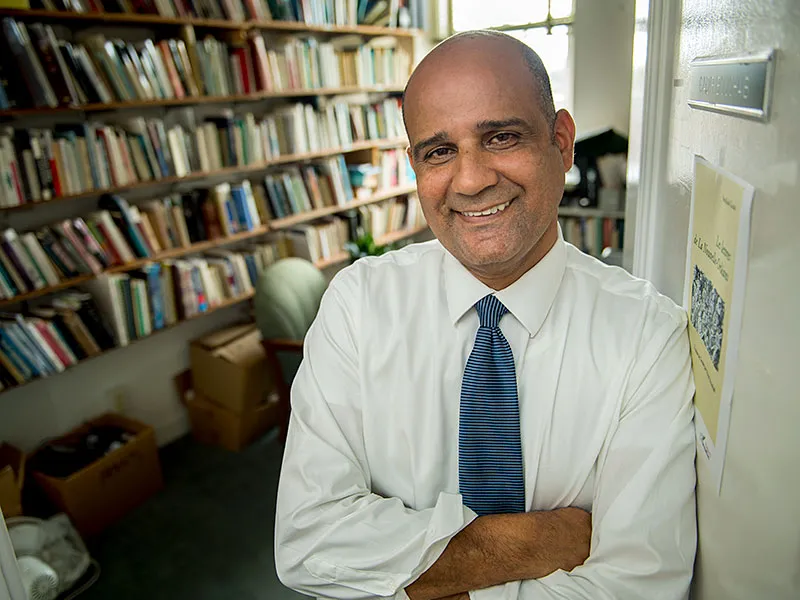
Bouchaib Gadir, PhD is a senior professor of practice of Arabic and serves as the director of the Arabic Language Program. In 2017, his book of poetry LES LETTRES DE LA NOUVELLE-ORLÉANS was published by L’Harmattan, Paris, France. Dr. Gadir served as an American Consultant on Education for the American Consul on Education (ACE) where he conducted onsite reviews on the Defense Language Institute (DLI) and for the National Cryptologic School (NCS). Dr. Gadir conducted a review of a proposal for New York University Abu Dhabi (NYUAD) titled "Leadership and Imagination in Performance: A Center for Incubation and Research.” He served as an Arabic Language Dialect coach to actors on the CBS series NCIS: New Orleans. In the Spring of 2019, he defended a second PhD, March 6, 2019 in Arabic Literature with a thesis titled “Response to Colonialism in Modern Arabic Literature.”

Brian Horowitz holds the Sizeler Family Chair Professorship and is a full professor in Jewish Studies and MENA at Tulane University. He grew up in Roslyn, New York and attended New York University (B.A.) and the University of California, Berkeley (M.A., Ph.D.), where he studied Slavic Languages. He has directed Jewish Studies at Tulane for sixteen years. He is the recipient of many major awards including Yad Hanadiv, Lady Davis, Alexander von Humboldt, and Fulbright. He is the author of six books, including Vladimir Jabotinsky’s Russian Years (2020) and Russian Idea–Jewish Presence (2013). He writes extensively about Israel and is presently working on radical right-wing Zionism in the Mandate period. Earlier in his career, he specialized in Alexander Pushkin and Russian intellectual history. More recently, he has published in popular outlets such as the Jerusalem Post, Times of Israel, Mosaic, and Jewish Review of Books. In addition to more than seventy scholarly articles, he has published over one hundred book reviews in journals across Israel, Europe, Russia, and the United States.

Christina Kiel is Professor of Practice in the Political Science Department. She teaches international relations, including “Politics of the Arab-Israeli Conflict” and “Peace Studies and Conflict Management.” Her research interests include the role of non-state actors in diplomacy and cultural diplomacy in conflict situations. Her current research analyzes Palestine’s cultural diplomacy in the context of Israeli occupation.

Andrew Leber is an Assistant Professor in the Political Science Department. He completed his Ph.D. at Harvard University and his undergraduate studies at Brown University, with additional time spent at the American University in Cairo studying Arabic. His research studies public policymaking and media environments in non-democracies, with a particular focus on the politics of the MENA region and the Arabian Peninsula. He is interested in understanding how political regimes attempt to stay ahead of public opinion, as well as how populations share news and challenge authorities under repressive conditions. In other work, he studies the drivers of U.S. foreign policy toward the MENA region. His research has appeared in outlets such as Governance, Politics & Society, Security Studies, and the Asian and Pacific Migration Review.
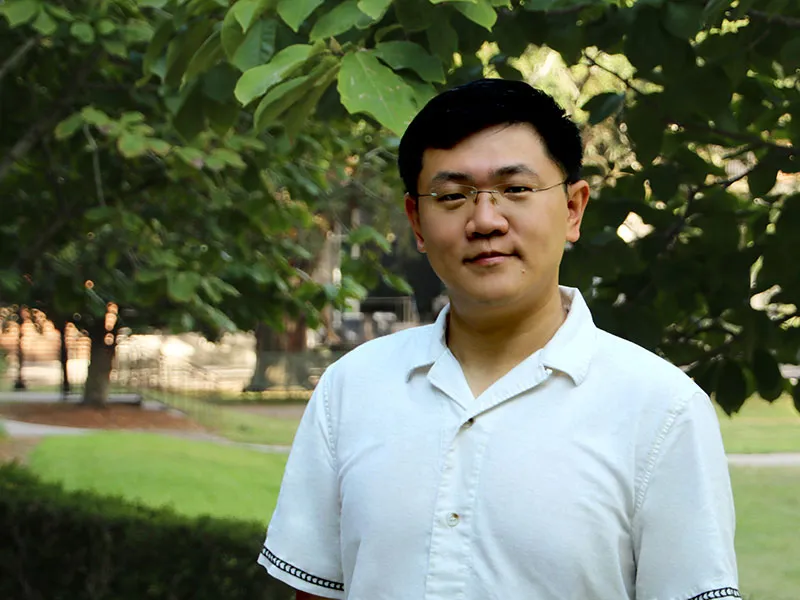
Xiaoyue Yasin Li is an Assistant Professor of History and MENA Studies. He received his Ph.D. in history from the University of Michigan, Ann Arbor in 2021. As a historian of the modern Middle East, Xiaoyue Li’s scholarship centers on techno-infrastructure within its broader social milieu in Egypt, and explores the interplay of materiality, technology, capitalism, and everyday politics. He is preparing the first manuscript for publication, tentatively titled Frictions into Forward: Empire, Capital, and Rail Infrastructure in Egypt. His writings appear in the American Historical Review, the International Journal of Middle East Studies, Technology and Culture, Modern Intellectual History, and the Durham Middle East Papers. His research has been supported by the ACLS Fellowship, and his dissertation won the Middle East Studies Association’s Malcolm H. Kerr Dissertation Award in Social Sciences. Before joining Tulane, Li held academic positions at the University of Michigan and Colby College.
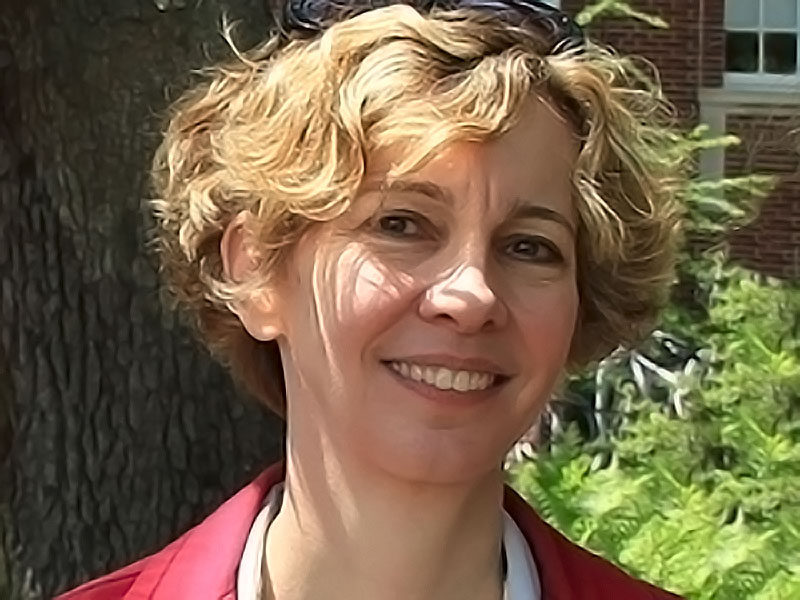
Adeline Masquelier is Professor in the Department of Anthropology. As a sociocultural anthropologist, she has conducted research in Niger, West Africa, on religion, gender, health, youth cultures, education, and environmental issues.
She is the author of three books, including Prayer Has Spoiled Everything: Possession, Power, and Identity in an Islamic Town of Niger (Duke University Press, 2001). Her second monograph Women and Islamic Revival in a West African Town (Indiana University Press, 2009) received the 2010 Herskovits Award for best scholarly book on Africa and the 2012 Aidoo-Snyder prize for best scholarly book about African women. Her latest book Fada: Boredom and Belonging in Niger (University of Chicago Press, 2019) was a finalist for the Best Book Prize awarded by the African Studies Association and received a special commendation for the Amaury Talbot Prize from the Royal Anthropological Institute.
She is the (co)editor of Dirt, Undress, and Difference: Critical Perspectives on the Body’s Surface (Indianan University Press, 2005), Muslim Youth and the 9/11 Generation (School for Advanced Research Press & University of New Mexico Press, 2016), Critical Terms for the Study of Africa (University of Chicago Press, 2018) and In the Meantime: Toward an Anthropology of the Possible (Berghahn, 2023). Her articles have appeared in American Anthropologist, American Ethnologist, Cultural Anthropology, Anthropological Quarterly, Public Culture, Cahiers d’Études Africaines, Africa, and the Journal of the Royal Anthropological Society. She is currently completing a book on the mass possession of schoolgirls in Niger.
Masquelier is a past President of the Society for the Anthropology of Religion, a section of the American Anthropological Association. At Tulane she previously served as Chair of the Department of Anthropology and Director of the Religious Studies Program. She is a past executive editor of the Journal of Religion in Africa. She is currently an editor of the International African Library at Cambridge University Press and serves on the Board of Directors of the African Studies Association. She also serves as co-editor of HAU: Journal of Ethnographic Theory.

Felicia McCarren is Professor of French, Associate Chair of Comparative Literature, and Director of its undergraduate program. She is the author of four books crossing the fields of cultural history, performance studies, and comparative literature. Her 2013 study of minority performance in France, French Moves: The Cultural Politics of le hip hop (Oxford University Press), was awarded the De la Torre Bueno Prize by the Society of Dance History Scholars and the Outstanding Publication of the Year 2014 from the Congress on Research in Dance. Her latest book, One Dead at the Paris Opera Ballet: La Source 1866–2014 (Oxford, 2020), explores science, sex, and race in four historical performances of an Orientalist environmental ballet by the Paris Opera’s first archivist.
Felicia has been a resident Fellow at the Institute for Advanced Study, Paris and the Fondation Maison des Sciences de l’Homme. She served as the Fulbright-Tocqueville Distinguished Chair at the École des Hautes Études en Sciences Sociales in Spring 2023 and was Leverhulme Visiting Professor at Oxford (2022–23). At Tulane, she co-founded the Spain-Morocco Confluences summer study abroad program and regularly teaches courses in cinema, medical drama, and comparative cultural studies. Her current project is a transnational history of modernist performance.
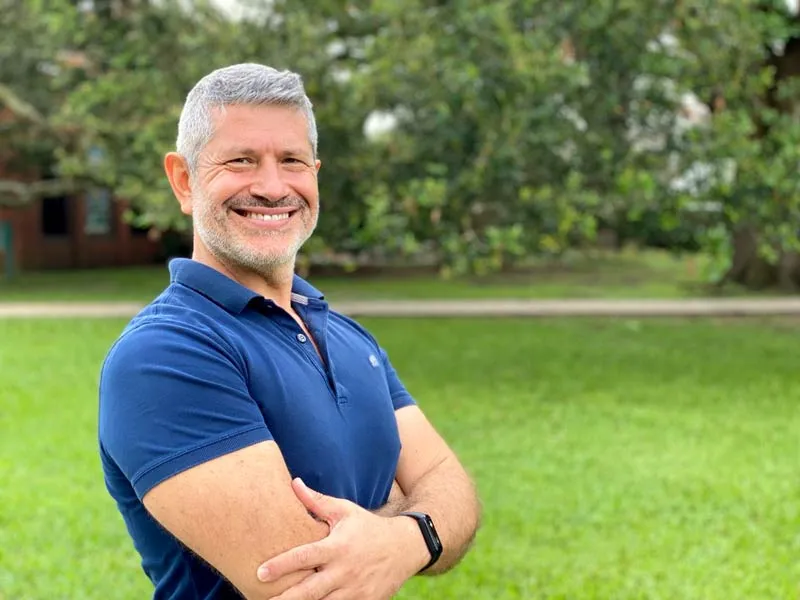
Roberto Nicosia, Professor of Practice of Italian at Tulane, has a double Ph.D. in Ancient History from University of Rome La Sapienza and Italian Studies from Rutgers University of New Jersey. Although he is specialized in the reception of classical literature (Greek and Latin) in Humanism and Renaissance Italy together with the phenomenon of Greek scholars’ migration to the West before and after the Fall of Constantinople, his interests include contemporary migrants’ literature in Italy, as well as the Northern-African migration repercussion on the political and cultural landscape (music, fashion) of Italy. Roberto Nicosia is the author of articles on XVI century Italian Short Stories and Pietro Bembo cultural relations with Costantinos Lascaris, as well as the editor of the volume The Italian Short Story trough the Century, Cambridge Scholars Publishing (2018). He is currently working on a volume on Pietro Bembo and his Greek Oratio “In favor of the Greek letters.”

Ari Ofengenden heads the Hebrew program at Tulane University. His Ph.D. is in Comparative Literature from Haifa University. He did his post-doctoral work in Tübingen University, Germany as well as in Monash, Australia. He is the author of Liberalization and Culture in Contemporary Israel (Rowman and Littlefield, 2018) and Introduction to the Poetry of Abraham Shlonsky, (De Gruyter, 2014).

Esra Özcan is a Communication Studies scholar at Tulane University, Department of Communication in New Orleans. She received her Ph.D. in Communication Science from Jacobs University Bremen in Germany. Her research focuses on the representations of gender in news media, feminist and anti-feminist women’s movements in Muslim countries, and postcolonial feminism. She is interested in right-wing women’s movements and women’s role in carrying authoritarian men to power. She is the author of the book Mainstreaming the Headscarf: Islamist Politics and Women in the Turkish Media (I.B. Tauris, November 2019).

Edwige Tamalet Talbayev, Associate Professor in the Department of French and Italian, is the Founding Director of MENA Studies at Tulane (2019-2024). A scholar of Maghrebi literature and Mediterranean studies, she is the author of The Transcontinental Maghreb: Francophone Literature across the Mediterranean (2017) and the co-editor of The Mediterranean Maghreb: Literature and Plurilingualism (2012) and Critically Mediterranean: Temporalities, Aesthetics, and Deployments of a Sea in Crisis (2018). She is the Editor of the Maghrebi literature journal Expressions maghrébines. At Tulane, she has developed MENA-related courses such as “Women Writers of the Arab World,” “Writing Algeria: Trauma, Melancholia, Fiction,” “Maghrebi Literature,” and “Francophone Literature of the Maghreb.” Recent MENA-related publications include “Sound Capture and Transmedial Resonance: Moncef Ghachem’s Lyric” (Francophone Postcolonial Studies, forthcoming); “Mediterranean Francophone Writing” (Cambridge UP, forthcoming); “Accidental Form, Mediterranean Transpositions, and NewFrancophonies in Malika Mokeddem’s La Désirante” (Liverpool UP, forthcoming); “Abdelkebir Khatibi’s Mediterranean idiom” (Liverpool UP, 2020); “Translation and Affect in Rachid Boudjedra’s La Prise de Gibraltar” (Contemporary French and Francophone Studies 22.3, 2018); “Whiting out Algeria: On the Limits of Assia Djebar’sLe Blanc de l’Algérie as Post-Traumatic Liturgy” (CounterText 4.2, 2018); “‘L’origine comme un secret’. Plein Été de Colette Fellous (Autoportrait en absence)” (Œuvres & Critiques 43.1, 2018) ; “Méditerranéiser les études francophones” (Revue des Sciences Humaines 330, 2018) ; “Chiasmus and Après-coup: Andalusia as Trauma in Rachid Boudjedra’s La Prise de Gibraltar” (Journal of North African Studies 23.1-2, 2018).
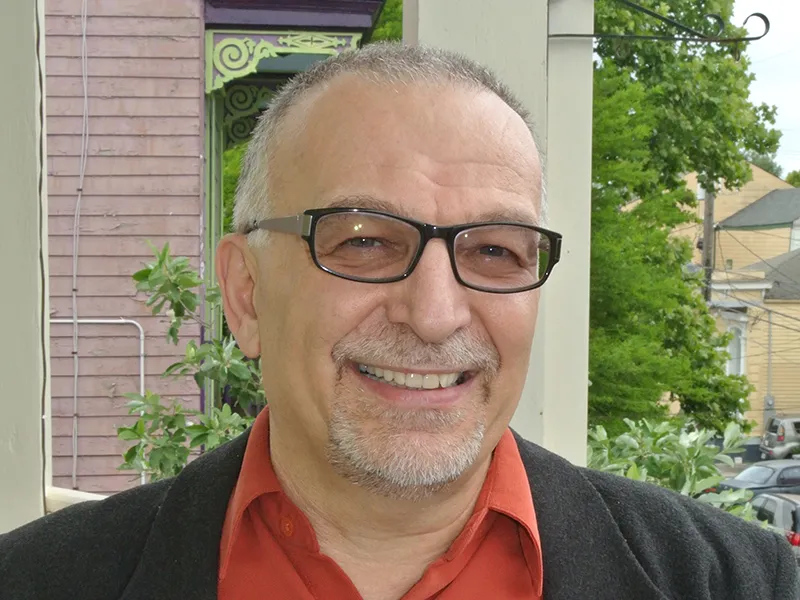
Ferruh Yilmaz is Associate Professor in the Communication Department specializing in populist and far right communication strategies. His research interests include rhetorical nature of human communication, the centrality of immigration, culture and Islam to far right populist rhetoric and liberal and mainstream responses. His latest book, “How the Workers Became Muslim: Immigration, Culture, and Hegemonic Transformation in Europe” (2016) examines the far right’s populist strategies in Europe that enabled them to successfully turn immigration from a labor issue into a cultural threat, and made immigration and cultural values the central issues for the mainstream parties appeal to the voters. As a result, social/political identities (e.g. social/political divisions) are now re-envisioned in ethnic and cultural terms. Before becoming an academic, he worked as a journalist for a number of news organizations in Britain, Denmark and Turkey including the BBC World Service and Danish Broadcasting Corporation (DR) and Cumhuriyet (Turkish daily newspaper).