


Tulane Philanthropy class awards $12,000 in grants to New Orleans culture bearers
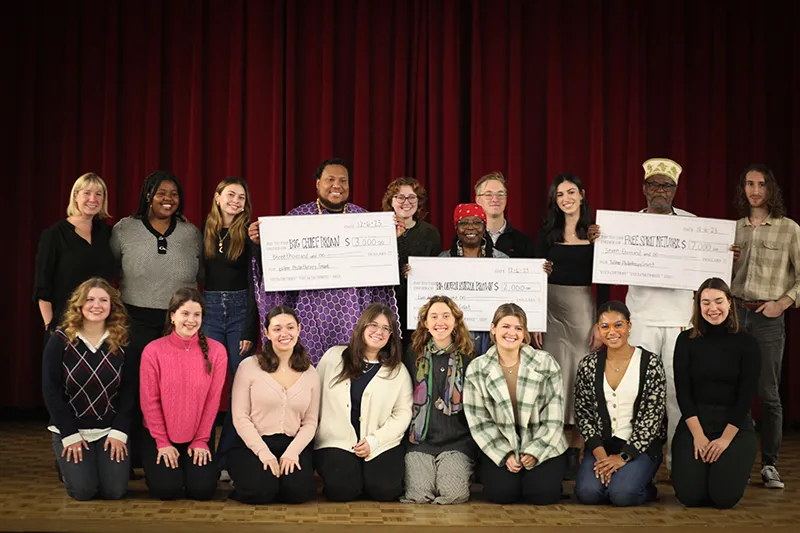
On Wednesday, December 6, students from SLA’s 2023 Philanthropy and Social Change course gathered in Dixon Recital Hall to present a total of $12,000 in grants to three New Orleans artists and community leaders. The awards, sponsored by the Doris Buffett Learning by Giving Foundation, are the culmination of a class that teaches students the process and value of philanthropy through a social justice lens. Friends and families of the winners were also in attendance for the event, which was hosted and organized by the students.
Throughout the ceremony, student speakers and award recipients alike emphasized the role of music and the performing arts in preserving and promoting the unique cultural heritage of New Orleans, and across the African diaspora.
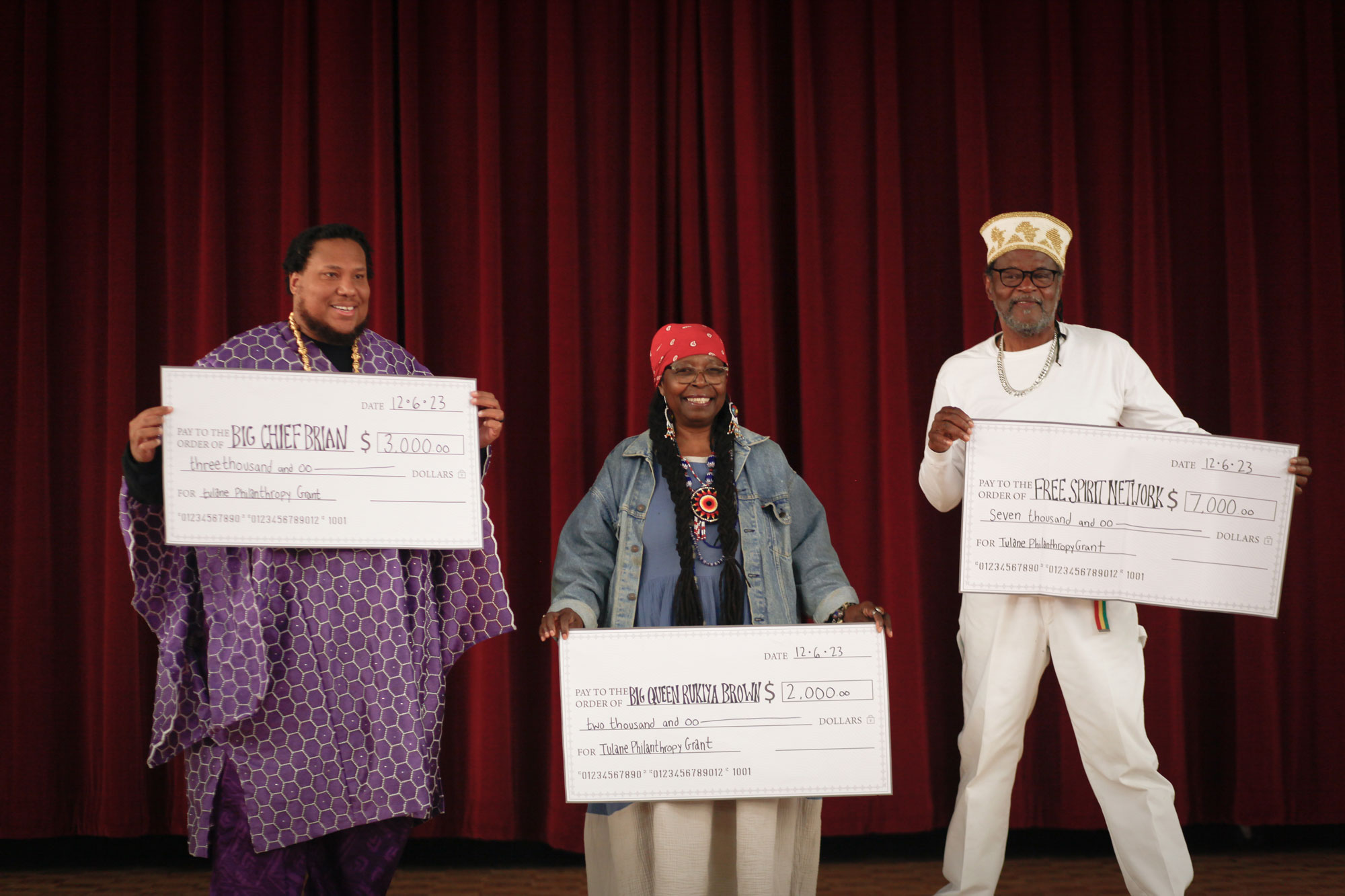
The first award of $2,000 went to Elenora Rukiya Brown, a visual storyteller, artist, and masking Indian queen. As an artist, Brown tells stories of her Chahta American Indian identity and African culture through dolls, or “soft sculptures,” quilts, and other mixed-media pieces. Quinn Cappiello, a student from the course, presented the award, saying “The way Eleanor uses and shares her talents to promote craftsmanship as healing for youth is truly inspiring.”
After greeting the crowd with “Halito,” the Chahta word for hello, Brown gave an emotional speech about her love for New Orleans and the resilience of its people. “It’s in your DNA to create and to give from your heart,” said Brown.
Avery Liggon, another student from the philanthropy course, presented the next award to Nkem Big Chief Brian Harrison Nelson, the youngest known big chief in New Orleans Black Mardi Gras Indian history. Expressing gratitude to Tulane, his ancestors, and his family, Big Chief Nelson highlighted the significance of using the $3,000 grant to restart his anti-violence youth literacy program.
The Big Chief wore a traditional West African Grand Boubou, and was decked head-to-toe in his favorite color purple. He also teased his forthcoming single: a blend of Mardi Gras music, jazz, and bounce.
The third and final award was given to Zohar Israel and the Free Spirit Network, an organization that student Lucy Vanderbrook described as “a remarkable initiative passionately committed to the preservation and celebration of African heritage through the vibrant rhythm of drum and dance.”
On stage Israel played the ngoni, a string instrument from Mali, traditionally used in West African storytelling. He plans to use the funds to buy new drums for the at-risk and under-resourced young students in his music education classes. “Everyone is putting them in the corner, I’m putting them up front,” Israel says.
The Philanthropy course, taught by Leslie Scott, an assistant professor in Theater and Dance, is part of the Strategy, Leadership and Analytics Minor (SLAM). Award winners were chosen from more than 50 applicants, and students spent the semester getting to know the individuals and institutions. Last year's class recognized the efforts of N'Fungola Sibo and the African Dance Drum Company, Inc., and Angela Herbert White for her music education program Make Music Nola. In their selections, students highlighted the importance of supporting New Orleans artists and culture bearers, ensuring that the city's artistic traditions thrive and endure for generations to come.
Professor Leslie Scott's Philanthropy & Social Change Class and Award Recipients.
2023-12-13
A Year of Accomplishments - December 2023 Newsletter
A Year of Accomplishments

Brian T. Edwards, Dean and Professor
Dear School of Liberal Arts Community,
As we come to the end of another transformative year, I would like to highlight a few major accomplishments from this past semester.
We held our inaugural Tulane Language Day as part of International Education Week, which demonstrated the cultural and linguistic diversity of this campus and saw inspired student participation.
Our third endowed Great Writers Series welcomed Pulitzer Prize-winning author Jennifer Egan, whose multiple storytelling events were without an empty seat. And to continue that momentum, we brought Tulanian and president of Sony Pictures Motion Picture Group Sanford Panitch (SLA ’89) to campus last week for a student-geared conversation on the critical value of liberal arts skills for success in the film industry.
Superlative recognition was bestowed on several professors, from Courtney Bryan’s MacArthur ‘Genius Grant’ to this month’s Mellon Foundation Award, which will support a Sawyer Seminar series on reproductive rights. I look forward to all that our faculty will continue to accomplish for this university and its academic advancement.
In reflecting on this past year, we also look forward to 2024. Together, we will continue to value intellectual curiosity, diversity of thought, and a shared commitment to making a positive impact on the world.
Wishing you all a joyful holiday season and a restful break. 
Philanthropy & Social Change Students Award Local Artists
Assistant Professor Leslie Scott’s ‘Philanthropy and Social Change’ class spent the semester evaluating local non-profits through a social justice lens. At their annual closing event—which is student organized and hosted—three New Orleans artists and community leaders were presented with a total of $12K in grant funding.
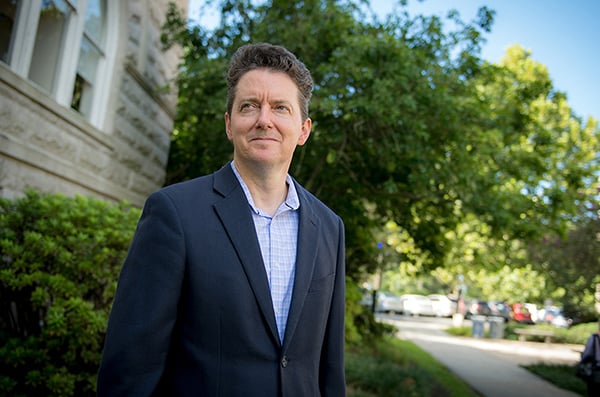
Economics Chair Receives Multiple Grants to Study Charters at National Level
Helmed by Professor of Economics Douglas Harris, The National Center for Research on Education Access and Choice (REACH) received over $975K in grants from gifts by the Walton Family Foundation and City Fund. The funding will back three years of research on the system-level effects of charter schools at the national level, to better understand how charters improve student outcomes and the role of policy in fueling these changes.
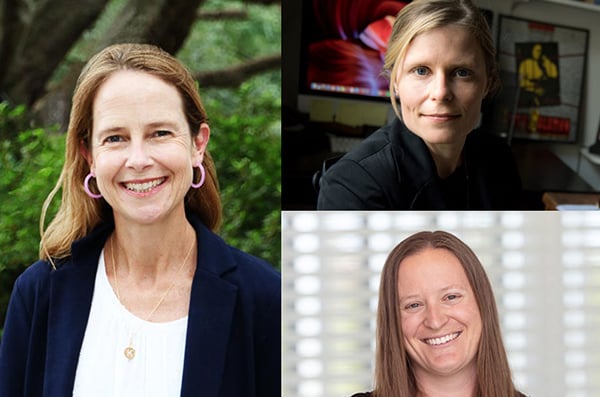
Mellon Foundation Awards Grant for Professors to Host Sawyer Seminar
The $225K grant will support a year-long seminar series exploring reproductive rights. Co-organized by Professor of English and Gender & Sexuality Studies Kate Baldwin, Assoc. Professor of History Karissa Haugeberg, and Newcomb Institute Admin. Associate Professor Clare Daniel, the series will begin in fall 2024 and bring community leaders and global researchers across the arts and humanities to Tulane.

Alumna Awarded Tulane's First-Ever Mitchell Scholarship
Kiera Sky Torpie (SLA ‛20) is Tulane’s inaugural recipient of the George J. Mitchell Scholarship, which recognizes intellectual achievement, leadership, and a commitment to public service with the aim of connecting future American leaders to Ireland. The linguistics major is one of 12 recipients selected from over 350 applicants, and will use the opportunity to pursue a master’s in creative writing at Queen’s University Belfast.
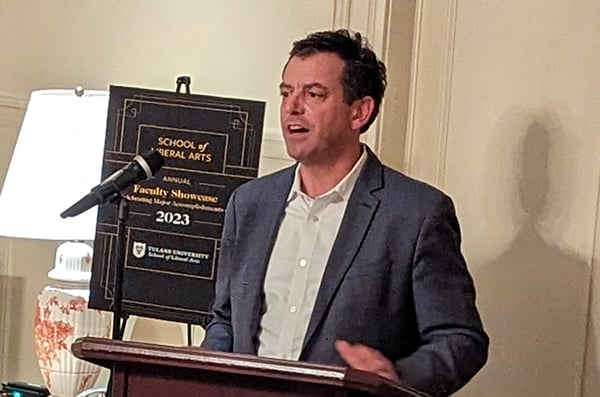
2023 SLA Faculty Showcase Program
This year, 42 School of Liberal Arts faculty reached major academic milestones through the publication of a major work—whether novel, monograph, album, or the staging of a play or exhibition. Check out each of their accomplishments in our 2023 Faculty Showcase program to explore the creativity, research, and dedication within each piece.
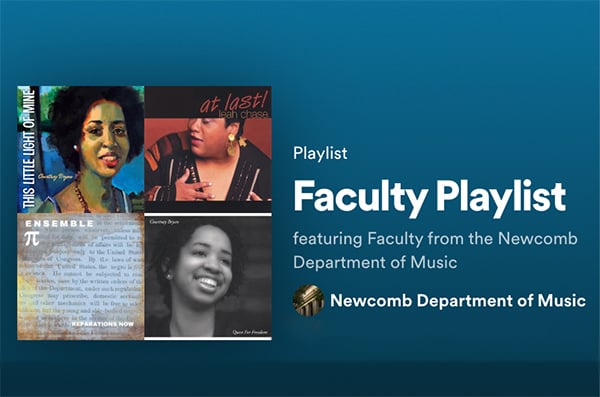
Newcomb Music's Spotify Playlist
Now that they’ve wrapped your 2023, ready for a new and eclectic sampling of music? Look no further than the Department of Music’s recently launched Spotify account. Featuring playlists and podcasts by faculty ranging from Courtney Bryan to C. Leonard Raybon, the account also includes personal favorites from Newcomb’s faculty and staff.




Tulane School of Liberal Arts
102 Newcomb Hall • New Orleans, LA 70118
liberalarts.tulane.edu
2023-12-13
Liberal Arts Dean welcomes Sony Pictures President alumnus for careers conversation
Sony Pictures President Sanford Panitch (SLA ‘89) may be a Los Angeles native, but he credits “the other LA” as where his entertainment career truly started.
Panitch, who majored in Political Science, has been president of the Motion Picture Group at Sony Pictures since 2019, following years as president of sibling studio Columbia Pictures. In this position, Panitch oversees all international film and television distribution—a savvy he initially cultivated as an undergraduate at Tulane University.
Last week, for a special Dean’s Speaker Series event, he visited his alma mater and its students to engage in a career-oriented conversation with School of Liberal Arts Dean Brian T. Edwards, about how a strong liberal arts foundation can set students pursuing the film industry apart.
As he shared with current undergraduates—majoring in everything from Communication and Cinema Studies to Business, Theatre & Dance, Marketing, or Digital Media Practices— last Wednesday, it was in New Orleans that Panitch started his first company. On breaks from school back in his hometown of Los Angeles, Panitch had an internship with New Line Cinema, and often brought film reels back to campus to continue viewing and annotating. In doing so, Panitch realized the limited distribution options in New Orleans and sought a workaround for getting these movies in front of audiences, finding the perfect opportunity for him to create Revive Screening.
Once Panitch created Revive he began circulating films from his internship at various New Orleans venues, from on-campus spaces to local theaters, including the beloved Prytania. He made connections, spread the word across neighborhoods and peer groups alike, and incentivized his classmates to redeem used ticket stubs for food and beverage deals at local watering holes. He essentially charted his own crash course in content creation, marketing, and promotions by determining what worked and what didn’t, sourcing organic demand and feedback, and learning from the fans he was, in fact, producing. And he did it all before Fandango, TikTok, or Instagram influencer marketing was even a blip on anyone’s radar.
After graduating from Tulane, Panitch sold Revive and returned to his original LA. In 1995, he was appointed executive vice president of production at 20th Century Studios. In 2008, after watching the growth of the international box office for over a decade and realizing the considerable percentage of market share for locally produced films, Panitch founded Fox International Productions. He served as its president until 2015, when he moved to Columbia Pictures, and then onto his current role.
The combination of critical thinking and unconventional ‘can-do’-ism comes from having a liberal arts education. Most of the time when we have interns who get good jobs, almost every one of them has had some version of a liberal arts education.
– Sanford Panitch, Sony Pictures President
The focus of his visit to the university was to discuss the state of the entertainment business in the new media landscape, and how major motion pictures are produced, marketed, and distributed in today’s world. He addressed the kinds of longform content that have broken through theatrically, from Megan to the Marvel Cinematic Universe, and he and Dean Edwards investigated the challenges in engaging audiences indoctrinated by TikTok.
Despite these challenges, “the business is more vibrant than ever,” Panitch remarked. “It’s a particularly good time to enter the entertainment business, because of how dynamic it is right now.”
In response to student questions, he addressed how film circulation promotes globalization and the ways a global liberal arts education is the best professional preparation for the next generation as they head out into our ever-changing world.
“Why is Hollywood the only industry where we have this global content? The reason is because we were a country of immigrants,” he explained. “The original movie studios needed to make movies for everybody that was in America, but America was already a melting pot, so it became global culture.”
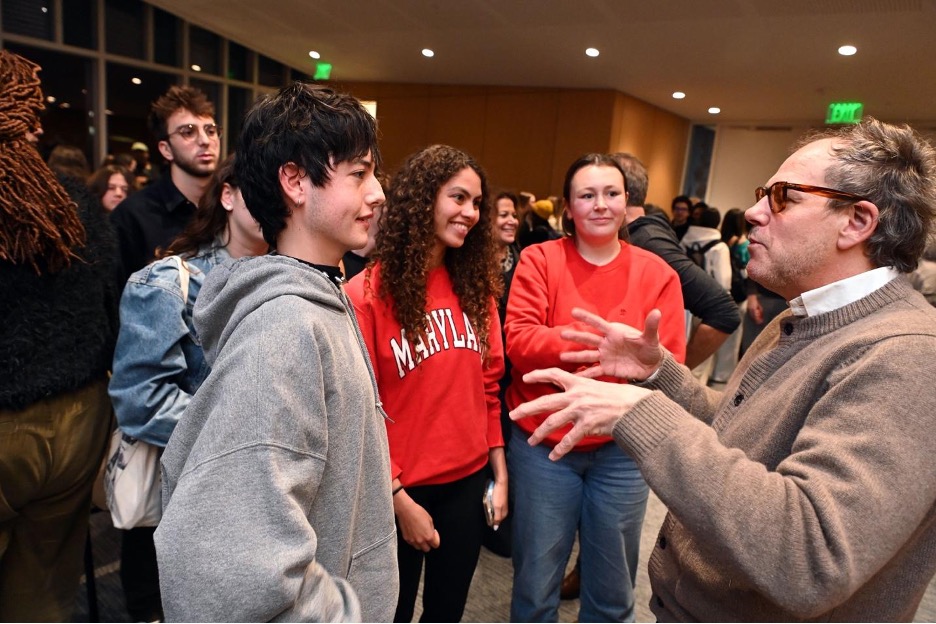
Following his talk with the dean, Sanford remained in Diboll Gallery to meet countless aspirant students and field questions (pictured below) on everything from script pitches to his favorite movie of all time.
Learn more about creative industries and SLAM offerings at Tulane School of Liberal Arts.
Written by Juliana Argentino
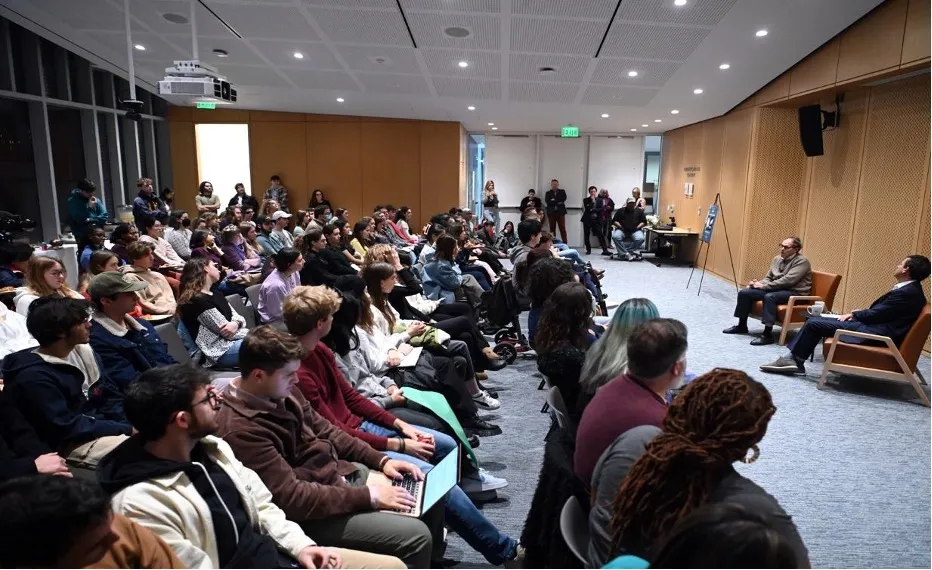
(L-R, facing audience) Sanford Panitch and Dean Brian T. Edwards speak before a packed student audience in Diboll Gallery on Wednesday, December 6, 2023, during Panitch’s visit to Tulane.
2023-12-13
Pulitzer Prize-winner Jennifer Egan spotlights the power of fiction during the Great Writers Series
The School of Liberal Arts welcomed Pulitzer Prize-winning author Jennifer Egan for an engaging evening on literary inspiration and craft in fiction, as part of the Carole Barnette Boudreaux ‘65 Great Writers Series. The day after her public lecture and book signing, Egan joined in a discussion on creativity and artificial intelligence with faculty members from both the School of Liberal Arts and School of Science and Engineering.
Attendees packed the newly inaugurated Lake Hall Theatre for the event, a testament to the popularity and staying power of Egan’s work. Egan’s oeuvre includes short stories, novels, and longform journalism; her latest book The Candy House (2022), a companion novel to the 2011 Pulitzer Prize-Winner A Visit From The Good Squad, earned a spot on the New York Times 10 Best Books of 2022 list.
Egan, an Artist-in-Residence in the English Department at the University of Pennsylvania, shared insights into her creative process during the mainstage lecture. An accompanying visual presentation guided the audience through Egan’s approach crafting a chapter of The Candy House titled “Lulu the Spy.” Originally published as a short story in the New Yorker and serialized on X (formerly known as Twitter), the inspiration for the work’s innovative form came from Egan’s domestic world—mainly the lists stored on her phone, which she found took on a surprising narrative quality.
Egan, who writes about authenticity and identity in the ever-changing digital landscape, spoke on the constant external influences on her fiction, and the role of writers as conduits for the world around them. She ended the lecture by emphasizing the importance of reading fiction—as a critical way to “feel connected to the sweep of the human experience”—especially in the attention economy, where deep reading feels like an act of resistance.
At the start of the event, School of Liberal Arts Dean Brian Edwards thanked Carole and Ken Boudreaux, who proudly sat in the front row of the auditorium. The ‘65 Great Writers Series, he explained, seeks to bring in prominent authors not only of great literature, but whose work “animates, contributes to, and helps reframe some of the key issues and questions of our time.” The work of past series authors—Pulitzer Prize-Winner Viet Thanh Nguyen, and novelist Amitav Ghosh—addressed the refugee experience and climate change, respectively.
These successful events illustrate the purpose of the Carole Barnette Boudreaux Creative Writing Endowed Fund, initiated in 2018, which aims to bring creative writers to Tulane to engage and inspire members of the University community. For her part, Egan thanked the School of Liberal Arts community for their “warm embrace.”
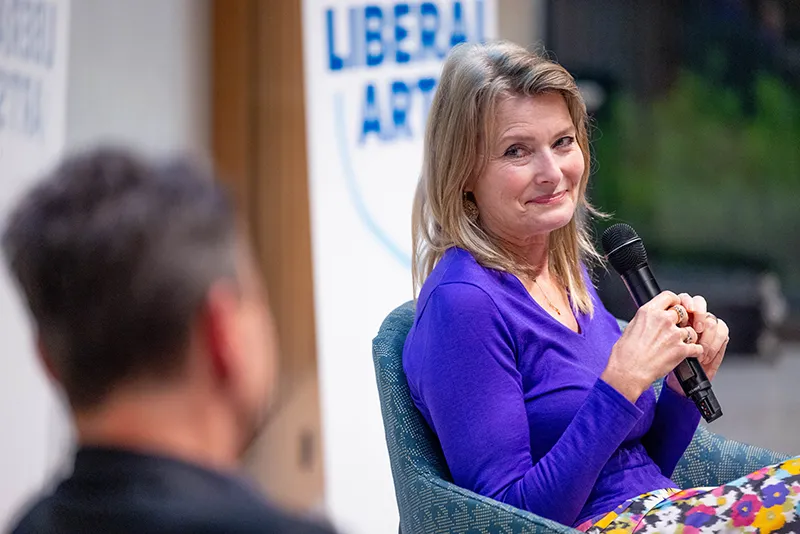
Pulitzer Prize-Winning author Jennifer Egan joins the Carole Barnette Boudreaux ‘65 Great Writers Series.
2023-12-13